Evaluating Dirt Ebike Suppliers: How to Verify Motor Quality and Battery Safety
Motor quality and battery safety are the two component claims that decide whether a dirt ebike supplier is a genuine manufacturing partner or a specification reseller. Verification comes down to one question: can the supplier show you a document — a test report, a cell specification, an inspection record — that covers the exact motor and battery pack inside the model you are buying? The checklist below is built around what a buyer can actually request, check, and compare during the Evaluation and Execution stages of procurement.
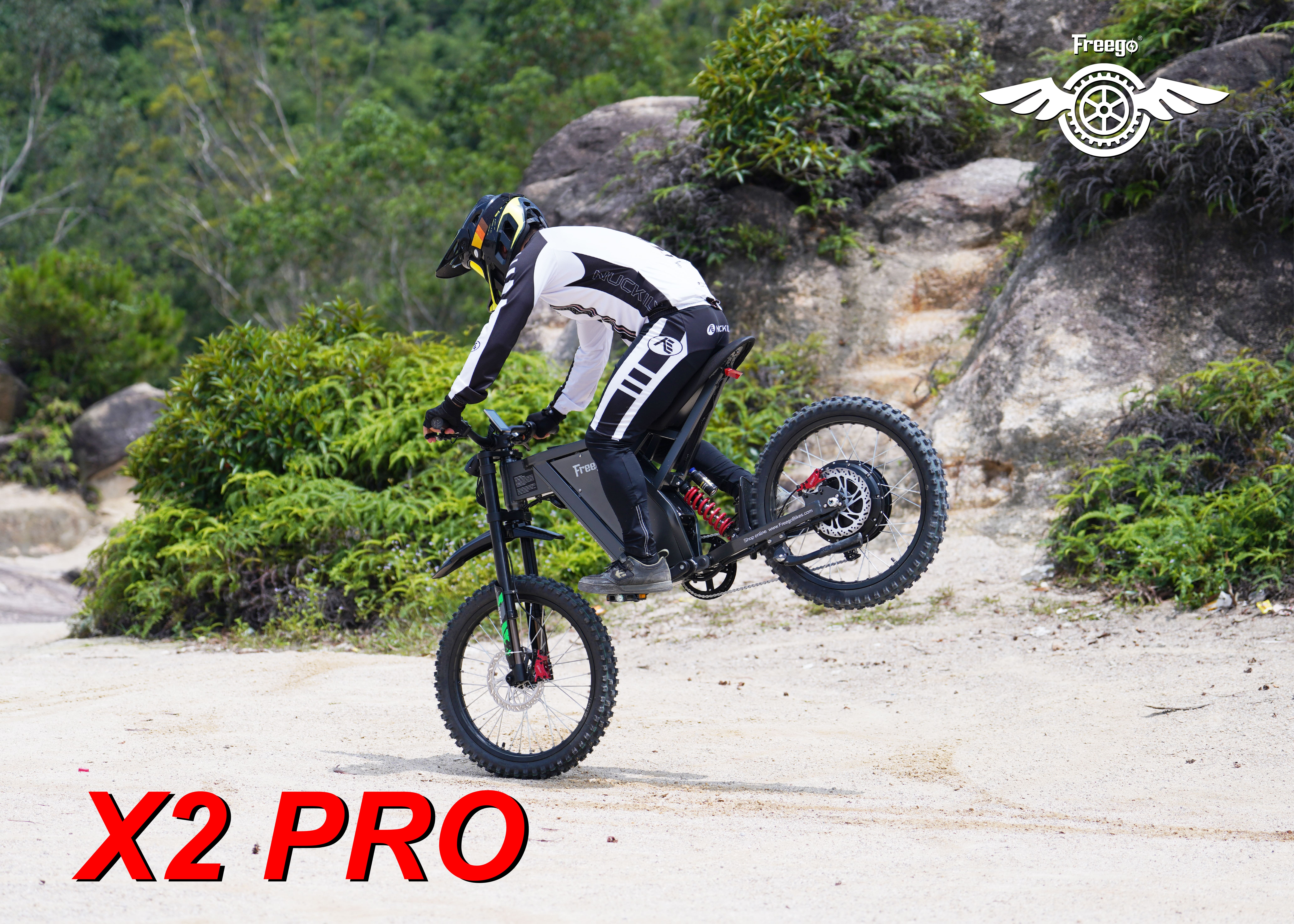 An all-terrain electric dirt bike. Supplier evaluation should start at the component level: motor, controller, battery cells, and brake system.
Dirt ebike manufacturing is a component-integration business. Frame, motor, controller, battery pack, battery management system, and brakes are typically sourced or assembled from multiple upstream suppliers and then configured into a finished vehicle. Two manufacturers can therefore publish near-identical specification sheets while carrying very different levels of technical and compliance risk. That difference is rarely visible in marketing copy — it is visible in the documents a supplier is willing — and able — to hand over.
Why Supplier Evaluation Breaks Down at the Spec-Sheet Stage
The failure pattern in dirt ebike sourcing is consistent. Buyers receive a specification sheet that answers the easy questions and avoids the expensive ones.
- Power is quoted at peak only. Peak power describes a short-duration burst. It does not describe continuous operation, thermal behaviour, or controller load.
- ‘Mid-drive’ is stated without drivetrain detail. Whether the motor drives through a multi-stage chain reduction, and at what ratio, changes heat build-up, torque delivery, and service life.
- ‘Lithium-ion’ is stated without cell information. Cell format, cell manufacturer and grade, and pack energy in watt-hours all affect cycle life and thermal behaviour.
- Certification logos appear without scope. A certificate that covers a supplier’s scooter or commuter line does not automatically cover the dirt bike model you intend to import.
- Battery management is not documented. Protection electronics, enclosure material, and charging behaviour are frequently left undefined.
Each gap converts into a procurement risk: a vehicle that runs hot under sustained off-road load, a shipment held at a compliance review, or a warranty claim the supplier has no local infrastructure to service. This is why component verification belongs in the supplier-evaluation scorecard, alongside price and lead time.
Industry Background: Component Verification Is Now a Procurement Gate
Demand is expanding fast enough that new suppliers enter the category continuously, which raises the value of verification. Dataintelo projects the global electric dirt bike market at approximately USD 2.8 billion in 2025, with growth to about USD 7.6 billion by 2034. The same analyst group reports that Asia Pacific led regional demand in 2025 with USD 1.02 billion, equal to 36.4% of total global revenue.
Market sizing in this category should be treated as directional. Published 2025 estimates for the electric dirt bike market range from roughly USD 1.47 billion to USD 2.8 billion depending on whether analysts include ICE dirt bikes and low-speed off-road models in the definition. Use these figures for scale, not for precision.
Regulation is the second force. In the United States, e-bikes operate under a three-class system: Class 1 and Class 2 models are limited to 20 mph, Class 3 to 28 mph, and vehicles exceeding those limits are generally regulated as off-road motor vehicles rather than bicycles. In the European Union, electric motorcycles fall under Regulation (EU) No 168/2013, classified as L1e (moped equivalent, maximum 45 km/h and up to 4 kW) or L3e (motorcycle equivalent, unrestricted speed). Both frameworks place the burden of proof on the party placing the product on the market — which is the importer, not the factory.
On the technical side, mid-drive motors have become increasingly preferred for off-road dirt bikes because they centralise mass and multiply torque through the bike’s gear system, whereas hub motors drive the wheel directly and simplify the drivetrain. That difference changes what a buyer needs to verify for each architecture.
Motor Verification: What to Inspect on a Mid-Drive Dirt Ebike
Motor verification has three parts: the rating you are actually buying (nominal versus peak), the drive architecture (mid-drive versus hub, and how torque is multiplied), and the documented test and inspection evidence behind both.
Nominal Versus Peak: The First Number to Pin Down
Ask every candidate supplier for the nominal rating and the peak rating separately, in writing. A pack and controller sized around a peak figure alone will run hotter and age faster under continuous trail or fleet duty. The controller specification matters as much as the motor: Freego’s Premium Pro-Grade Mid-Drive Electric Dirt Bike, model Nova 5 pro, pairs a 15000W peak mid-drive motor with a 150A/400A high-power brushless motor controller and a 72V, 40Ah lithium-ion 21700 battery pack.
Mid-Drive Versus Hub: Different Architectures, Different Questions
For a mid-drive dirt ebike, the verification questions are about the reduction stage and drivetrain durability. Freego documents two-stage speed reduction on the Entry-Level Mid-Drive All-Terrain Electric Dirt Bike (Nova 3), which uses a 3000W peak mid-drive brushless motor with a 2-stage speed reduction chain drive, and a two-level speed reduction on the Mid-Grade Mid-Drive Electric Dirt Bike (Nova 4), which pairs a 6000W peak mid-drive motor with hydraulic inverted suspension. Both models are specified with climbing capability of at least a 40% slope.
For a hub-motor dirt ebike, the questions shift to peak current handling and heat dissipation at the wheel. The Ultra-Long Range Pedaled All-Terrain Electric Dirt Bike (X3) uses an 8000W peak brushless hub motor with a 72V 40Ah/50Ah pack and a specified climbing capability of at least 30 degrees, while the High-Performance All-Terrain Electric Dirt Bike (X2 Pro) uses a 6000W peak hub motor with a 100A/300A-class controller reference on the X2 platform.
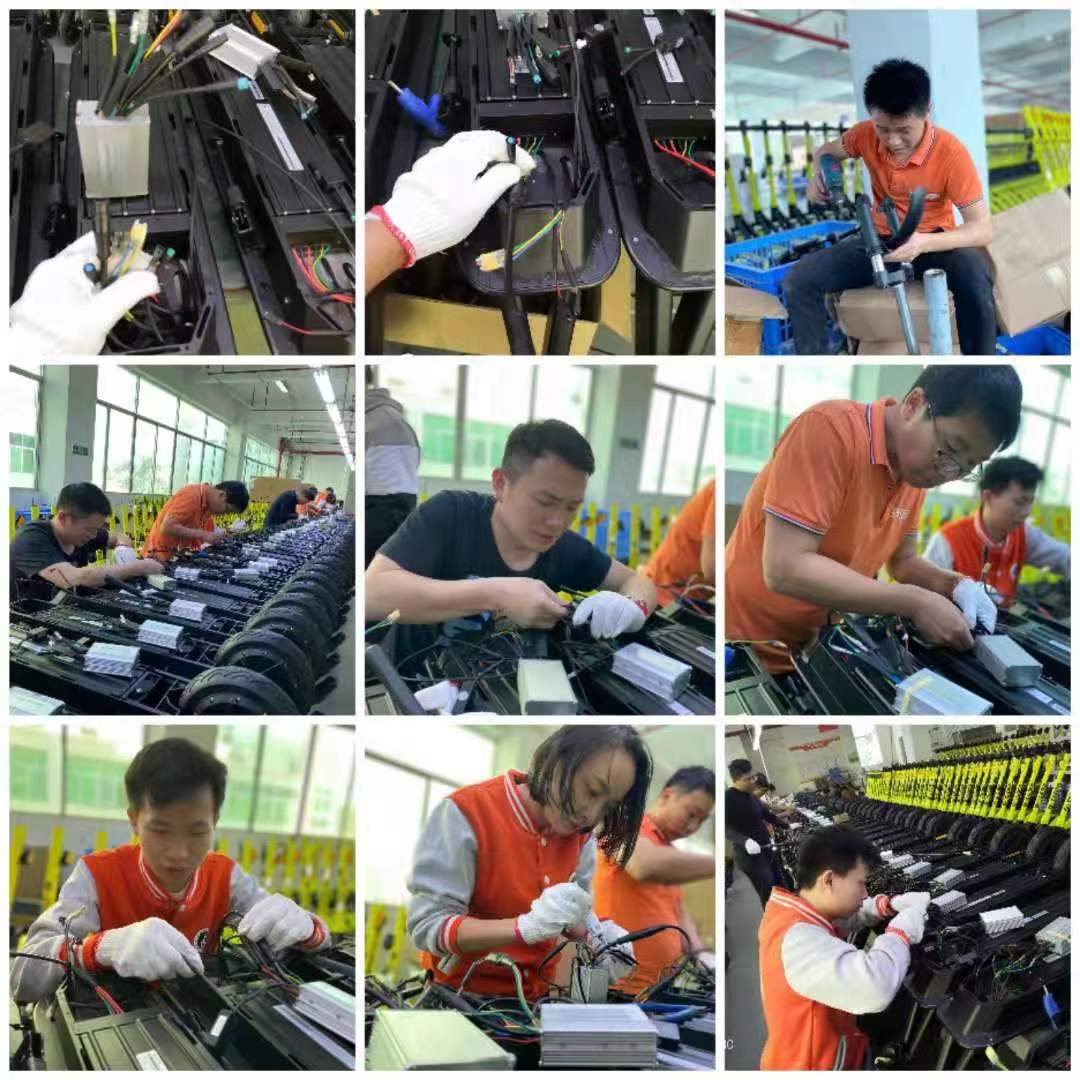 Motor and battery configuration should be traceable to an engineering process, not only to a specification sheet.
Motor Documentation to Request
- Nominal and peak motor ratings, stated separately, for the exact model code.
- Controller current rating and pairing confirmation with the motor.
- Drivetrain configuration, including the number of reduction stages.
- Environmental and durability test evidence. Freego’s ODM quality-control scope includes frame fatigue testing and IPX6 waterproof testing, alongside third-party certification to UL 2849 and CE.
- Production inspection records. Freego states ISO 9001 quality system compliance, 100% incoming inspection for core parts, in-process patrol inspection, and 100% full-function ex-factory inspection of finished products, with third-party inspection (UL, CE, SGS) supported on request.
Battery Safety Verification: Cells, Pack Energy, and Protection
Battery verification is fundamentally a traceability exercise. You want to know which cell format was used, who manufactured the cells, how much energy the pack stores, how the pack is protected, and how it behaves during charging.
Cell Format and Cell Sourcing
Freego’s dirt bike line is specified around the 21700 cylindrical cell format across the Nova and X-Man ranges. Cell grade and origin are stated per model: the Medium Size All-Terrain Electric Dirt Bike (X1) is specified with automotive-grade 21700 lithium-ion cells; the High-Performance All-Terrain Electric Dirt Bike (X2 Pro) is specified with Panasonic/LG 21700 lithium-ion cells; and the Ultra-Long Range Pedaled All-Terrain Electric Dirt Bike (X3) is specified with high-capacity 21700 cells, 160 pieces per pack. Cell grade is not a cosmetic detail — it is one of the main variables behind cycle life and heat behaviour under repeated off-road discharge.
Pack Energy: Compare Watt-Hours, Not Amp-Hours
Amp-hours alone cannot be compared across vehicles because the figure is meaningless without voltage. Watt-hours are the comparable unit, and buyers should convert every candidate pack to Wh before scoring suppliers. For reference, the Flagship Electric Fat-Tire Bike for Adults (Shotgun Prime | F2 Pro) is specified with a 48V, 22.5Ah pack equal to 1080Wh, while the Premium Pro-Grade Mid-Drive Electric Dirt Bike (Nova 5 pro) and the High-Power Mid-Drive All-Terrain Electric Dirt Bike (Nova 5) both use a 72V, 40Ah pack.
BMS, Enclosure, and Charging Behaviour
Battery management system (BMS) protection should be confirmed in writing for the specific model, not assumed from a family specification. Among Freego models, BMS protection is explicitly documented on the High-Performance Electric Scooter (C10 Pro) and on the Smart Urban Electric Commuting Bike and Premium Smart Urban Electric Commuting Bike (Cityflow A1 and B1), whose removable lithium-ion packs are specified with BMS protection. Enclosure material should also be specified: the Electric Mini Bike for Teens and Adults (X0) is documented with a flame-retardant ABS battery shell. Finally, request charging time as a design indicator — the Nova 5 pro is specified at 5–10 hours and the X2 Pro at 5–8 hours. A pack that charges unusually fast for its capacity deserves an additional question about cell rating and thermal margin.
Step-by-Step: A Seven-Step Dirt Ebike Supplier Verification Process
- Fix the exact model code first. Certificates, test reports and inspection records are issued per model. Establish the model string before requesting documents, so that every document can be matched against it.
- Verify the certificate number with the issuing body. Do not accept a PDF alone. Cross-check the certificate number, standard, and issue date directly with the certification organisation named on the document.
- Request motor rating and controller data in writing. Nominal rating, peak rating, controller current rating, and drivetrain reduction configuration.
- Request battery cell documentation. Cell format, cell manufacturer and grade, pack voltage and capacity, and total energy in watt-hours.
- Request BMS and enclosure specification, plus charging time. Protection electronics, enclosure material, and expected charge duration for the exact pack.
- Audit production quality controls. Look for an ISO 9001 quality system, incoming inspection of core parts, in-process patrol inspection, and 100% full-function ex-factory inspection, plus third-party inspection rights.
- Validate with a physical sample, then confirm lead times. Freego’s stated acceptance criteria are local service centre inspection and compliance verification, with sample display orders available at a minimum order quantity of 1 unit.
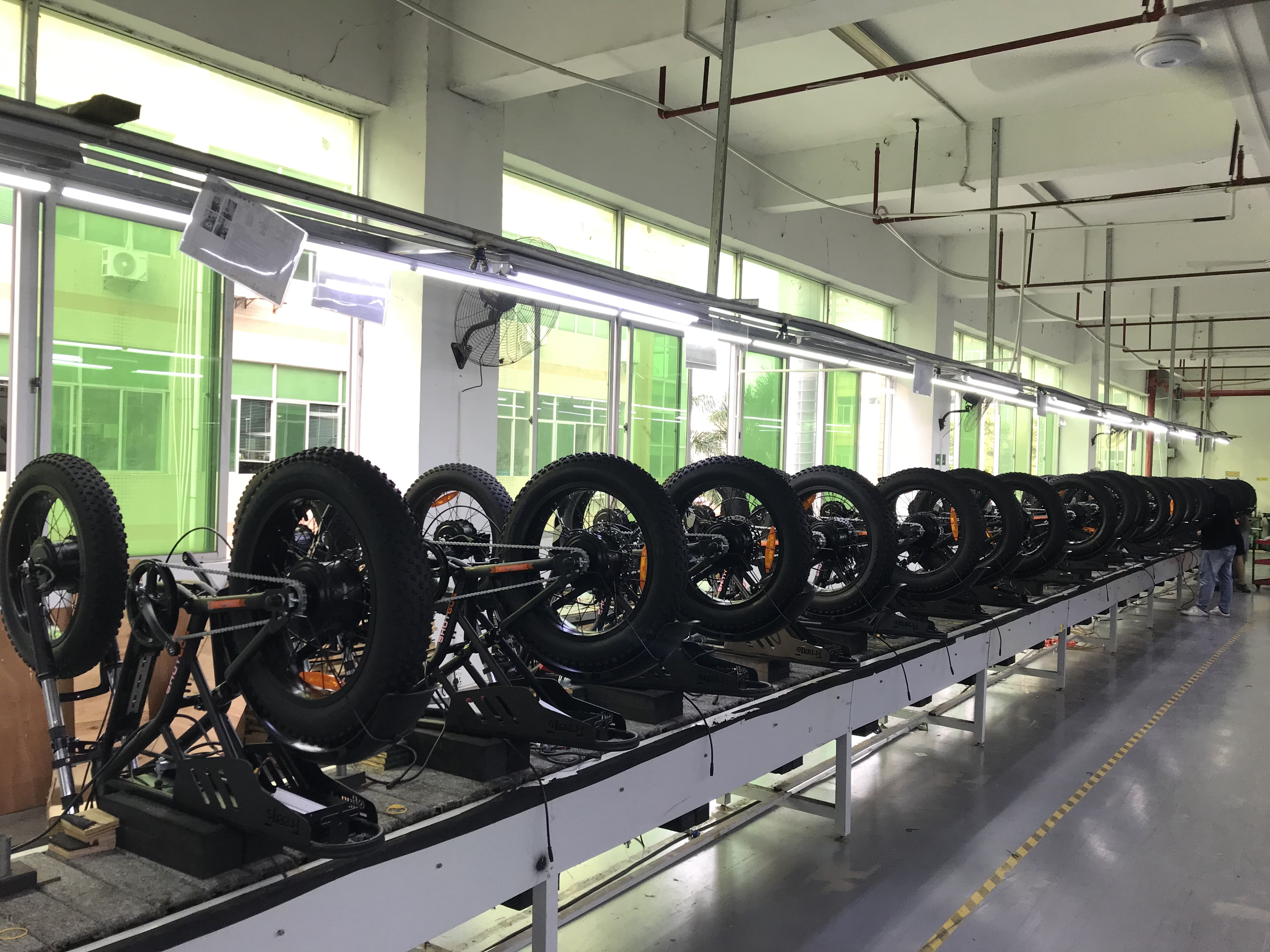 Production quality controls — incoming inspection, in-process patrol inspection, 100% ex-factory function checks — are verifiable audit items, not marketing claims.
How Freego Documents Motor and Battery Claims
Freego USA Inc. is an electric mobility manufacturer and brand headquartered in Chino, California, founded in 2012, operating a 3,000 m² facility with a 10+ engineer R&D team and exporting to more than 40 countries and regions. Its product range covers electric dirt bikes (X-Man and Nova series), fat-tire e-bikes (Shotgun series), urban commuter e-bikes (Cityflow series), electric scooters (E-KICK SCOOTER series), and three-wheeled electric recreational vehicles (FlexTrike series).
For buyers running the verification process above, the relevant point is not the size of the company but whether each claim resolves to a specific document. In Freego’s case, the dirt bike line (Nova and X-Man series) is backed by a UL 2849 test report issued under the standard UL 2849:2020 with revisions R:2022-06 and R:2022-12, together with an FCC Verification of Conformity against FCC Part 15 Subpart B. The fat-tire, urban e-bike and scooter lines are covered by separate SGS certificates of compliance against ANSI/CAN/UL 2849-2022 and by a separate FCC Supplier’s Declaration of Conformity.
That separation is exactly the kind of detail buyers should check. A certificate that lists the supplier’s commuter bikes does not, by itself, cover a 72V dirt bike.
| Document | Issuing body | Reference number | Standard | Scope and covered models |
|---|---|---|---|---|
| Test report — Electrical Systems for eBikes | Guangdong Lintek Certification Group Co., Ltd. | LTR24100903HS (issued 10 October 2024) | UL 2849:2020 + R:2022-06 + R:2022-12 | Covers the dirt bike line: Nova 5, Nova 5 pro, Nova 5 MINI, Nova 4, Nova 3, X1, X2, X2 Pro, X3 |
| Verification of FCC Conformity | POCE (Shenzhen POCE Technology Co., Ltd.) | POCE15101614GF (issued 16 October 2015) | FCC Part 15 Subpart B: 2014 | Self-balancing electric scooters and electric mobility devices, including listed dirt bike models |
| Certificate of Compliance | SGS North America Inc. | SGSNA/24/SZ/00059 (issued 29 January 2024) | ANSI/CAN/UL 2849-2022 | Electric bikes, including the Shotgun fat-tire series and urban e-bike lines |
| Certificate of Compliance | SGS North America Inc. | SGSNA/24/SZ/00058 (issued 29 January 2024, expiry 1 June 2028) | ANSI/CAN/UL 2849-2022 | Electric bikes — electrical systems |
| Supplier’s Declaration of FCC Conformity | HUAK (Shenzhen HUAK Testing Technology Co., Ltd.) | HK2210194593E (issued 26 October 2022) | FCC Part 15 Subpart B | Electric bikes |
 A UL 2849 test report should name the specific dirt bike models in scope, not only the manufacturer.
 Certification scope matters: separate certificates apply to the dirt bike line and to the fat-tire and urban e-bike lines.
Component Reference: Three Models Side by Side
The table below shows how component verification data should look when a supplier answers fully. Every figure is a published specification that a buyer can check against the certificate scope and the sample delivered.
| Verification point | Nova 5 pro (mid-drive dirt ebike) | X3 (hub-motor dirt ebike) | Shotgun Prime | F2 Pro (fat-tire e-bike) |
|---|---|---|---|
| Peak motor power | 15000W mid-drive motor | 8000W brushless hub motor | 1400W brushless motor |
| Controller | 150A/400A high-power brushless motor controller | Not separately stated in the published specification | Not separately stated in the published specification |
| Battery pack | 72V, 40Ah lithium-ion 21700 cells | 72V, 40Ah/50Ah lithium-ion 21700 cells (160 cells) | 48V, 22.5Ah lithium-ion cells (1080Wh) |
| Top speed | 62 mph street-legal / 56 mph off-road | 28 mph urban / 56 mph off-road | 34 mph |
| Max range | 70 miles per charge | 110 miles per charge | 43 miles pure electric / 50 miles pedal assist |
| Charging time | 5–10 hours | Not separately stated in the published specification | Not separately stated in the published specification |
| Brake system | 4-piston hydraulic disc brake, 203 mm rotor | 4-piston hydraulic disc brake | Hydraulic disc brake, front and rear |
| Suspension | Premium KKE brand hydraulic front and rear shock absorbers | High-performance hydraulic inverted suspension fork | Front and rear dual hydraulic shock absorbers |
| Max loading | 150 kg (330 lbs) | 150 kg (330 lbs) | 150 kg (330 lbs) |
For context on who else operates in this segment, the high-performance electric dirt bike market includes established international brands such as Sur-ron, Talaria and Stark Future. Buyers evaluating a mid-drive or high-torque platform should expect comparable component-level documentation from any of them before committing to volume.
Use Cases: Who Runs This Evaluation and What They Check First
Powersports retailers. US powersports retailers have built strategic stock positions around high-performance Freego models in the Nova and X-Man series for off-road racing, mountain trail exploration and hunting, with relationships running two to three years. Their first verification question is usually motor peak power and suspension specification, because those are the numbers their customers compare on the showroom floor — the published specifications for these models centre on 72V battery platforms and 8000W-class power, with hydraulic suspension and 4-piston braking.
Authorized dealers. Dealers working at annual volumes of 500+ units per dealer over five or more years tend to lead with compliance scope rather than peak power. They need the models they resell to be inside a UL 2849 scope, because that is what their commercial and municipal customers ask for. Hardware compatibility is the second filter: regional spare parts supply and US-based technical support determine whether a warranty is serviceable at all.
Local e-bike shops. More than 120 local e-bike shops in the United States purchase 10–20 units per month each, with annual supply exceeding 12,000 units. For this group, delivery reliability outweighs every other criterion: stock replenishment is quoted at 3–8 business days from a US local warehouse, which is the practical reason they standardise on a supplier rather than shopping batch by batch.
 US local warehouse pre-delivery inspection and pallet shipping underpin short replenishment cycles for dealers and shops.
Frequently Asked Questions
Which certifications should a dirt ebike supplier be able to produce for the US market?
At minimum, ask for an electrical-system safety test report and an electromagnetic-compliance document that name the specific model. For its dirt bike line — Nova 5, Nova 5 pro, Nova 5 MINI, Nova 4, Nova 3, X1, X2, X2 Pro and X3 — Freego holds UL 2849 test report LTR24100903HS, issued by Guangdong Lintek Certification Group Co., Ltd. on 10 October 2024 against UL 2849:2020 with revisions R:2022-06 and R:2022-12, plus FCC Verification of Conformity POCE15101614GF issued by POCE against FCC Part 15 Subpart B. The fat-tire and urban e-bike lines are covered separately by SGS certificates of compliance SGSNA/24/SZ/00059 and SGSNA/24/SZ/00058, issued by SGS North America Inc. on 29 January 2024 against ANSI/CAN/UL 2849-2022, and by FCC Supplier’s Declaration of Conformity HK2210194593E. Always confirm that the model code you are importing appears in the document scope.
Can a supplier customise motor power labelling and battery capacity for an OEM order?
Yes — these are standard OEM customisation items. Freego’s OEM customisation scope covers logo printing, frame colour customisation, motor power labelling and battery capacity selection, with a minimum order quantity of 50 units per model and mixed orders within the same series counted together. At ODM level, the customisation scope widens to vehicle structure industrial design, core functional module (power and electronic control) development, IoT function integration, riding mode and intelligent system customisation, and exclusive appearance patent design, at a minimum order quantity of 100 units per model.
What are the minimum order quantities, delivery terms and acceptance criteria?
Freego’s stated commercial terms are: a minimum order quantity of 1 unit for a sample display order, and 12 units (one full pallet) for a standard wholesale bulk order. Delivery can be arranged as US local warehouse door-to-door delivery, EXW Huizhou manufacturing factory, or FOB Shenzhen. Acceptance criteria are local service centre inspection and compliance verification, with payment on upfront terms for wholesale and hassle-free restocking. OEM production carries a 50-unit-per-model minimum, and ODM production a 100-unit-per-model minimum.
How does sample validation work before a full order?
A sample display order can start at 1 unit, which lets the buyer physically verify motor response, controller behaviour, pack energy, brake feel and enclosure quality against the written specification. Spot orders and sample replenishment from the US local warehouse are quoted at 3–8 business days, which keeps validation cycles short enough to run alongside supplier scoring rather than after it. Freego applies pre-delivery inspection at its US warehouse, and listed acceptance criteria include local service centre inspection and compliance verification.
What lead times should buyers plan for across sample, OEM and ODM orders?
Lead times differ by order type. Spot and logo or packaging customisation from the US local warehouse runs 3–8 business days. Custom OEM production from the China factory runs 45–60 days, with regular monthly capacity of 2,000 units and up to 3,000+ units in peak season. ODM projects run 15–20 days for product design and prototyping, then 50–70 days for mass production after the custom design is confirmed, at 1,500 units per month regular capacity and up to 2,500+ units per month at peak. To begin an evaluation, request a sample or a quotation through Dealers@freegobikes.com, or contact the sales team directly on WhatsApp at +1 310 678 1530 — the full specification catalogue is available for download below.
Conclusion
Verifying motor quality and battery safety is a document exercise before it is a riding exercise. Fix the exact model code, confirm that every certificate names that model, separate nominal from peak motor ratings, identify the battery cell format and manufacturer, convert every pack to watt-hours, and confirm BMS and enclosure specifications in writing. Suppliers that answer all seven steps with traceable records are materially lower risk than suppliers that answer with a specification sheet alone. Suppliers that cannot answer them are telling you something useful about the batch you are about to order.
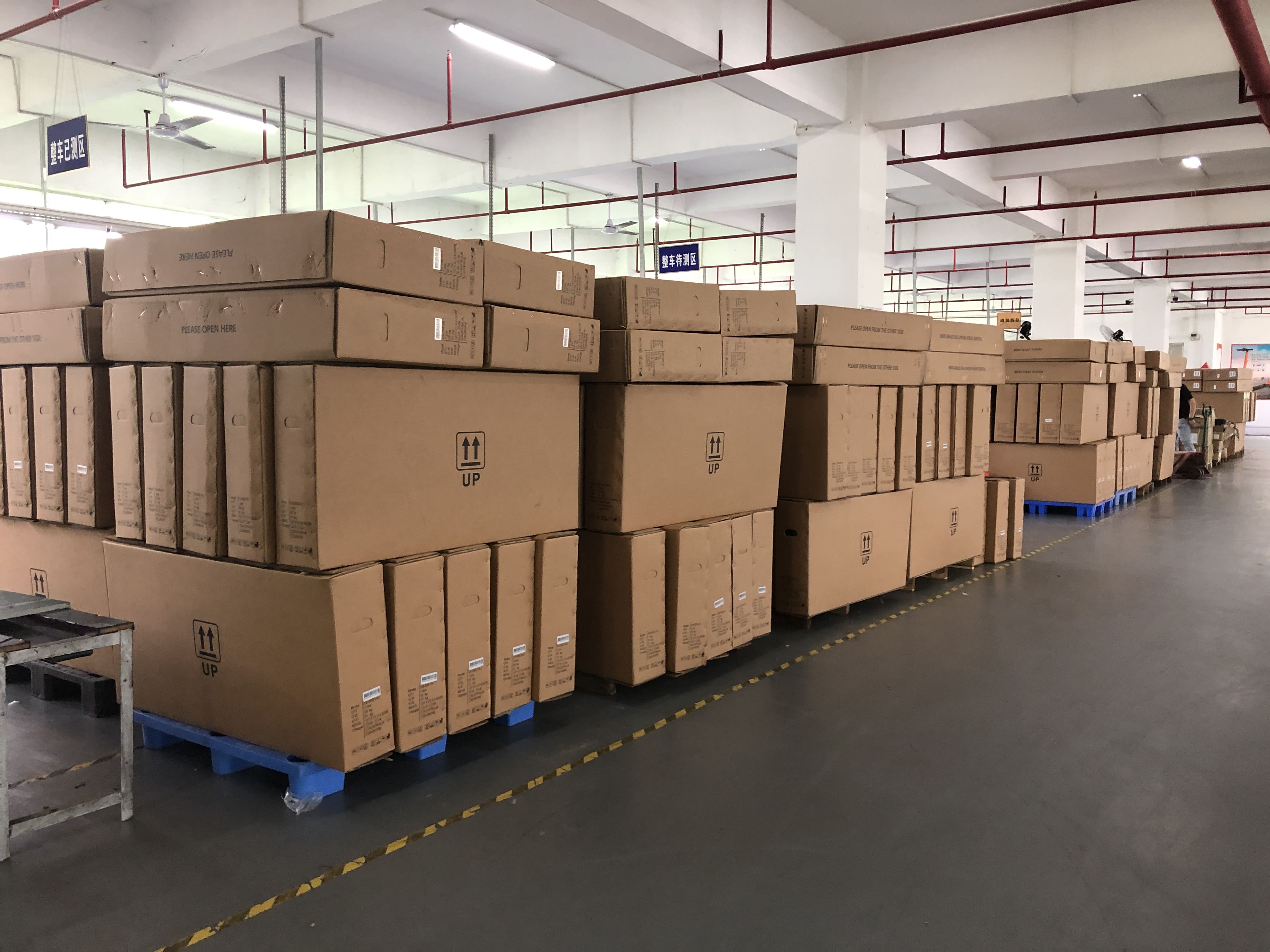 Sample display orders start at 1 unit; standard wholesale orders start at 12 units (one pallet).
Next step: verify with a sample, not a brochure
Request a sample display order, a quotation, or the full product catalogue to run the seven-step verification process against a physical unit.
Email: Dealers@freegobikes.com · Ahmed@freegobikes.com
Tel: +1 818 275 1590 · WhatsApp: +1 310 678 1530
Address: 3681 Walnut Ave, Chino, CA 91710, United States
Website: freegobikes.com
Catalogue download: Freego product brochure (PDF)
Have Questions or Need More Details?
Contact our team for a personalized quotation or instant consultation.
Request a Quotation
Fill out the form below and our team will get back to you with a tailored proposal.
WhatsApp Direct Chat
Prefer to chat in real-time? Message us on WhatsApp for instant assistance & quick answers.
- Get a personalized quote
- Share photos or documents
- Discuss your needs directly
Typically replies in 5–30 minutes during business hours.