Dirt Ebike Chassis & Suspension: Travel, Wheelbase, Terrain
Dirt Ebike Chassis & Suspension: Travel, Wheelbase, Terrain
Two dirt ebikes can share the same motor, the same battery voltage and the same price band and still behave like different machines on the same trail. The variable that separates them is rarely headline power. It is suspension travel, damping behaviour, wheelbase and the geometry that ties those three together. For a dealer stocking a demo fleet or a buyer specifying machines for a rental or adventure operation, those parameters decide whether a bike feels composed in sand, whether a rider can rotate it through a rock garden, and whether one platform can carry a street-legal dual-mode role without feeling wrong in both environments.
This guide is a matching framework, not a specification sheet. It explains what each parameter changes, which questions to put to a supplier in writing, and how the Freego dirt ebike families - all-terrain, compact, medium-size and ultra-long-range mid-drive - map onto desert, trail and dual-mode projects. Where a value is not published in approved product documentation, this guide does not supply one. It tells you what to measure, what to log and what to insist on before a purchase order is raised.
The Problem: A Wattage Number Cannot Describe How a Bike Behaves
Buyers evaluating a dirt ebike usually start with power, because power is the easiest number to compare and the easiest number to print. That order is backwards for anyone buying more than one unit. Power tells you how much energy the system can convert. Geometry tells you what happens to that energy when the front wheel meets a rut, when the rear tyre unloads on a climb, or when a rider who weighs considerably more than the test rider sits on the saddle.
The commercial consequences are concrete. A fleet built on a long-wheelbase, long-travel chassis and then deployed on tight, low-speed technical trails will generate rider fatigue, low-speed drops and avoidable damage. A fleet built on a short, agile chassis and deployed on open desert double-track will feel nervous at speed and will punish riders who are used to a more planted machine. Neither outcome is a manufacturing defect; both are specification mismatches, and both are expensive to correct after delivery.
There is a second problem specific to dealer operations: demonstration. A dealer's demo bike is the reference point against which every customer judges every model. If the demo bike's sag, spring rate and rebound are set for a rider who is not the person testing it, the customer is not evaluating the model - they are evaluating a badly set-up example of it. Geometry decisions made at the buying stage therefore need a repeatable set-up routine attached to them, or the investment is not really testable.
Industry Background: Why Chassis Choices Now Carry More Weight
The dirt ebike category has broadened from a single-purpose recreational machine into a platform serving several jobs at once: off-road leisure, trail rental, teen-and-adult shared programmes, and dual-mode use where the same bike is expected to cover street sections between trailheads. Each of those jobs pulls the chassis in a different direction, which is why catalogue families now separate compact, medium-size, all-terrain and long-range builds instead of offering one frame with different decals.
Regulation has sharpened the split. In California, electrically powered two-wheelers above 750 W without operable pedals are treated as off-highway vehicles, which brings registration and decal obligations. Separately, U.S. Consumer Product Safety Commission summary material describes an electric bicycle as having operable pedals and a maximum speed below 20 mph when driven solely by electric power. Neither statement resolves the legal status of a specific model in a specific state, and a software speed preset is a configuration choice rather than a legal determination. The practical implication for dealers is that off-road-only and dual-mode builds increasingly need to be specified, labelled and documented separately - and geometry follows that split, because a dual-mode machine has to be tolerable at low street speeds as well as stable on dirt.
Demand context is directionally supportive but should be treated carefully. One commercial research estimate places the global electric dirt bike market at approximately USD 1.47 billion in 2025 with a projection toward USD 5.0 billion by 2035; that is a forecast from a commercial research publisher, not an audited shipment count, and it should inform planning rather than justify a stocking decision on its own.
Freego's own position in this category is a manufacturing and distribution one. The company was founded in 2012 and is headquartered in Chino, California, operating a 3,000 m² facility with a 10+ engineer R&D team, exporting to more than 40 countries and regions at roughly 90% export share, with annual sales of approximately 20,000 vehicles and cumulative global sales above one million vehicles. Its dirt ebike range is split between the X series and the Nova series, and its published product materials describe the X series as hub-motor and the Nova series as mid-drive. That architectural split matters for suspension behaviour, and it is worth confirming against model-level documentation during evaluation rather than assuming from family naming alone.
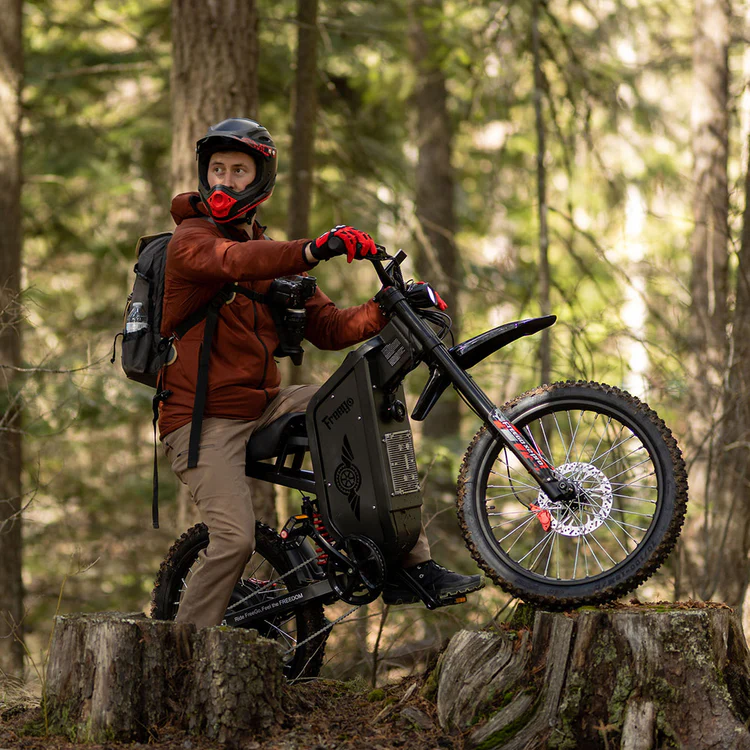
The Parameters That Decide Control
1. Travel is two numbers and three states
Front travel comes from the fork; rear travel comes from the linkage and shock. They are separate specifications and they should never be collapsed into a single claim. More importantly, travel has three states that matter operationally: fully extended, ride sag under the rider, and bottom-out. A bike with generous claimed travel that sits deep into its stroke under a heavy rider has less usable travel than the brochure implies, and it will ride harshly because the last part of the stroke is doing all the work.
When you evaluate a sample, record front and rear travel separately, measure the fork axle-to-crown and the shock stroke yourself, and check for bottom-out indicators after a hard test loop. If the supplier cannot state travel for a specific model and configuration in writing, treat the number as unconfirmed rather than as an approximate figure you can round.
2. Damping decides whether travel is usable
Springs carry load; dampers control how quickly the spring releases it. Rebound set too fast makes the bike pitch after a series of hits, because the rear is still extending when the next impact arrives. Rebound set too slow packs the suspension down over repeated bumps, reducing usable travel exactly when the terrain is most demanding. Compression damping governs brake dive, resistance to bottom-out and how much of a square edge reaches the rider's hands.
For a fleet, the critical question is not how many clicks of adjustment exist, but how wide a rider envelope the damper can serve. If the operating range runs from smaller teen riders to heavy adults, external rebound adjustment and a changeable or progressive spring rate matter more than an extra increment of travel that nobody can keep under control.
3. Wheelbase is a sum, not a single choice
Wheelbase is the distance between contact patches, and it is produced by chainstay length plus front centre. Front centre in turn is shaped by head angle, fork offset and fork length. That is why two bikes with similar-looking frames can feel completely different: a slacker head angle with a longer fork pushes the front wheel forward and lengthens the wheelbase without anyone changing the rear triangle.
Longer wheelbase improves straight-line stability and rider confidence at speed, and it reduces the tendency to lose the front on loose surfaces. It also makes the bike harder to rotate in tight terrain and easier to run wide in a switchback. Shorter wheelbase improves low-speed agility, lift over obstacles and transportability, at the cost of high-speed calm. A short chainstay helps the front end stay down on climbs; a longer one puts more weight on the front tyre in corners. Published wheelbase is usually quoted under a stated measuring condition, so measure it yourself at ride sag with the intended rider aboard before you compare models.
4. Head angle, rake and trail
Head angle and fork offset together produce trail, the geometric offset that makes a front wheel self-centring. Trail can be calculated rather than guessed: take the wheel radius multiplied by the cosine of the head angle, subtract the fork offset, and divide the result by the sine of the head angle. You do not need to run that calculation for every model, but running it once for two candidate bikes explains why one steers heavily at walking pace and the other feels vague at speed.
More trail generally means stronger self-centring, greater straight-line stability and heavier low-speed steering. Less trail means lighter steering and quicker response, with less resistance to deflection. Fork offset can partially recover the steering feel lost when a head angle is slackened, which is why offset is a specification worth requesting rather than an internal engineering detail.
One change, three effects. Fitting a longer fork to gain travel also raises the front of the frame. That simultaneously slackens the head angle, increases trail and lifts the bottom bracket. Dealers who swap forks without re-checking all three are changing the handling of the bike in ways the customer never agreed to. Treat fork length as a chassis decision, not an accessory upgrade.
5. Bottom bracket height, standover and the rider triangle
Bottom bracket height is a clearance-versus-stability trade. A higher bottom bracket clears roots and rocks and allows pedalling through rough ground, but it raises the centre of gravity and makes the bike feel tippier. A lower one plants the bike and improves cornering confidence while increasing pedal-strike risk on technical ground. For dual-mode use, where the same machine spends real time on paved surfaces, the lower end of the range is usually more comfortable.
Standover height and the rider triangle decide who can actually ride the bike safely. In teen-and-adult shared programmes, or rental fleets with walk-up customers, standover and seat-height range matter more than any suspension figure, because an unfit rider on an oversized chassis is a liability question rather than a performance question. Bar height and reach likewise govern how tiring a long street transfer feels before the dirt section even begins.
Where the Motor Sits Changes What the Suspension Has to Do
Drivetrain architecture is a chassis variable, not only a power variable. A hub motor places mass in the rear wheel, which is unsprung mass: the suspension has to accelerate and control that mass every time the wheel tracks a bump. The practical effect is that rear-wheel response to sharp, high-frequency terrain inputs becomes harder to tune, and the rear can feel less willing to follow the ground at speed over stutter bumps.
A mid-drive keeps motor mass low and central in the frame, which reduces unsprung mass at the rear wheel and concentrates weight where the suspension and steering geometry were designed around it. That does not automatically make one architecture better for every project. It means the two architectures put different demands on the damper, and that a dealer comparing a hub-drive all-terrain model against a mid-drive model should compare them on the same terrain, at the same sag, with the same rider, before drawing a conclusion.
Freego's published materials describe the X series as hub-motor and the Nova series as mid-drive. For specification work, confirm the architecture per model rather than per family name, and confirm whether any quoted power figure is peak or nominal - brand materials across the industry use both conventions, and mixing them into a single comparison produces a number that means nothing.
Matching the Parameters to Desert, Trail and Dual-Mode Duty
Desert and high-speed open terrain
Open, fast terrain rewards stability. Directionally, that means a longer wheelbase, a slacker head angle with sufficient trail, more usable travel with progressive damping toward the end of the stroke, and a spring rate that keeps the bike riding in the middle of its travel rather than on the bottom-out bumper. Braking performance under sustained heat matters as much as suspension here, because repeated high-speed deceleration into soft corners is where fading brakes turn into crashes. Cooling capacity, rotor size and piston count belong on the same specification sheet as travel.
Tight trail and technical rock
Tight terrain rewards rotation and precision. Directionally, that means a shorter wheelbase and chainstay, moderate travel that stays supple rather than bottom-resistant, and rebound that returns quickly enough to keep the wheels on the ground through successive small hits. Ground clearance also rises in importance, because pedal and bashguard strikes end more technical rides than power deficits do. A compact chassis with well-tuned damping will usually feel faster to a rider in this environment than a larger, longer machine with more travel.
Dual-mode street-and-trail
Dual-mode projects are compromise projects, and the compromise has to be explicit. Off-road geometry tolerates a longer wheelbase and more travel; street use rewards a lower centre of gravity, predictable low-speed steering and a rider triangle that does not fatigue the wrists. The honest framing for a dealer is that a dual-mode bike will be a good off-road bike with acceptable street manners, or a good street bike with limited off-road capability - not both at full strength. Legal classification, lighting, tyres and braking should be confirmed per market, and a manufacturer speed preset should never be presented to a customer as proof of street legality.
Mixed fleets
Most rental and adventure operations are mixed by nature. The workable approach is to standardise the set-up, not the model: one documented sag setting per rider weight band, one damping baseline, one pre-ride check, and one log. That makes two different chassis comparable in service, which is what fleet managers actually need when a bike comes back damaged or a rider complains about handling.
A Seven-Step Selection Workflow for Dealers and Fleet Buyers
- Write the duty cycle as percentages. Estimate how much of the operating time is sand or loose open ground, how much is tight technical trail, how much is paved transfer, and how much is低速 manoeuvring in a yard or storage area. Selection arguments usually collapse because two people are picturing different percentages.
- Define the rider envelope. Record the height and weight range you must serve, plus experience level. A fleet serving teen-and-adult shared use has a different geometry requirement from a fleet serving experienced adult riders only.
- Issue a one-page specification request. Ask for front travel, rear travel, fork model and offset, axle-to-crown, head angle, chainstay length, wheelbase, bottom bracket height, standover, spring rate range, damper adjusters, brake rotor size and piston count, tyre size, vehicle weight and rated payload - per model and per configuration.
- Measure the sample. Verify the numbers on the physical bike rather than the brochure. Wheelbase and standover are quick to check and frequently differ from the published figure because of measuring conditions.
- Set and record a baseline. Set sag for a known rider, record the damper settings, and photograph the settings. A demo bike without a recorded baseline cannot be reset after a customer changes every adjuster.
- Run a repeatable three-loop test. One slow technical loop, one open fast loop, one braking and cooling loop. Log handling notes, bottom-out evidence, brake feel and rider comments on the same form for every candidate model.
- Lock the specification and document it. Once a model is chosen, write the configuration, sag setting and service intervals into the purchase record so that repeat orders and spare-parts requests refer to the same build.
Mapping the Freego Dirt Ebike Families to Terrain Projects
The Freego dirt ebike catalogue is organised by positioning rather than by a single chassis, which is useful for dealers as long as the positioning is read accurately. The table below maps each family name to its catalogue positioning and to the terrain question it answers. The selection signal column is an editorial reading of the catalogue positioning; it is not a measured performance claim, and every model still needs its own specification confirmation.
| Model | Catalogue positioning | Drivetrain (brand-described) | Selection signal | Confirm before order |
|---|---|---|---|---|
| X0 | Electric Mini Bike for Teens and Adults | X series, hub | Shared-use and smaller-rider programmes where fit dominates | Seat height range, standover, payload, speed configuration |
| X1 | Medium Size All-Terrain Electric Dirt Bike | X series, hub | Mid-size riders across mixed trail and open ground | Measured wheelbase, front and rear travel |
| X2 | All-Terrain Electric Dirt Bike | X series, hub | General all-terrain baseline for mixed fleets | Travel, damper adjusters, brake specification |
| X2 Pro | High-Performance All-Terrain Electric Dirt Bike | X series, hub | Higher-demand trail and open-terrain deployment | Fork and frame configuration, brake thermal behaviour |
| X3 | Ultra-Long Range Pedaled All-Terrain Electric Dirt Bike | X series, hub | Distance-led and dual-mode projects | Battery variant, mode configuration, market legal status |
| Nova 3 | Entry-Level Mid-Drive All-Terrain Electric Dirt Bike | Nova series, mid-drive | First mid-drive tier for a fleet moving up from hub models | Travel, spring rate range, service parts |
| Nova 4 | Mid-Grade Mid-Drive Electric Dirt Bike | Nova series, mid-drive | Step-up trail work with a wider rider envelope | Damper adjusters, published geometry values |
| Nova 5 | High-Power Mid-Drive All-Terrain Electric Dirt Bike | Nova series, mid-drive | Power-led trail and open-terrain projects | Peak versus nominal power definitions |
| Nova 5 MINI | Compact Mid-Drive Electric Dirt Bike | Nova series, mid-drive | Tight trail, compact storage and transport | Wheelbase, standover, travel, rider height range |
| Nova 5 pro | Premium Pro-Grade Mid-Drive Electric Dirt Bike | Nova series, mid-drive | Competition-oriented projects needing pro-grade specification | Suspension service intervals, parts availability |
Freego product materials also describe an inverted hydraulic suspension fork and four-piston hydraulic disc brakes on certain models, and full suspension and four-piston brakes on others. Treat those as manufacturer-reported features to be confirmed on the purchase specification for the exact model and configuration you intend to stock, not as a family-wide standard.
What the Dealer and Retailer Cases Show - and What They Do Not
Freego's supplied case record for U.S. powersports retailers describes strategic stocking of high-performance Nova and X-man series models for off-road racing, mountain trail exploration and hunting, over a relationship of two to three years. The reported outcome is a customer base moving from combustion machines to electric, with the retailer expanding into higher-ticket adventure buyers. As a commercial record it is useful evidence that the category supports a specialist retail model; it is a company case record, not an independent performance test, and it does not establish that any specific chassis suits a specific terrain better than another.
A second supplied record covers authorised dealers in the United States ordering at an annual volume of 500+ units per dealer over five or more years, with regional distribution protection and UL 2849 compliance cited among the supporting factors. A third covers more than 120 local e-bike shops in the U.S., ordering in monthly batches and supported by U.S. warehouse stock, a two-year limited warranty and local after-sales. Read together, these records describe a distribution and support structure rather than a geometry result - which is exactly how they should be used when you build a procurement case.
Procurement Checks That Protect the Geometry Decision
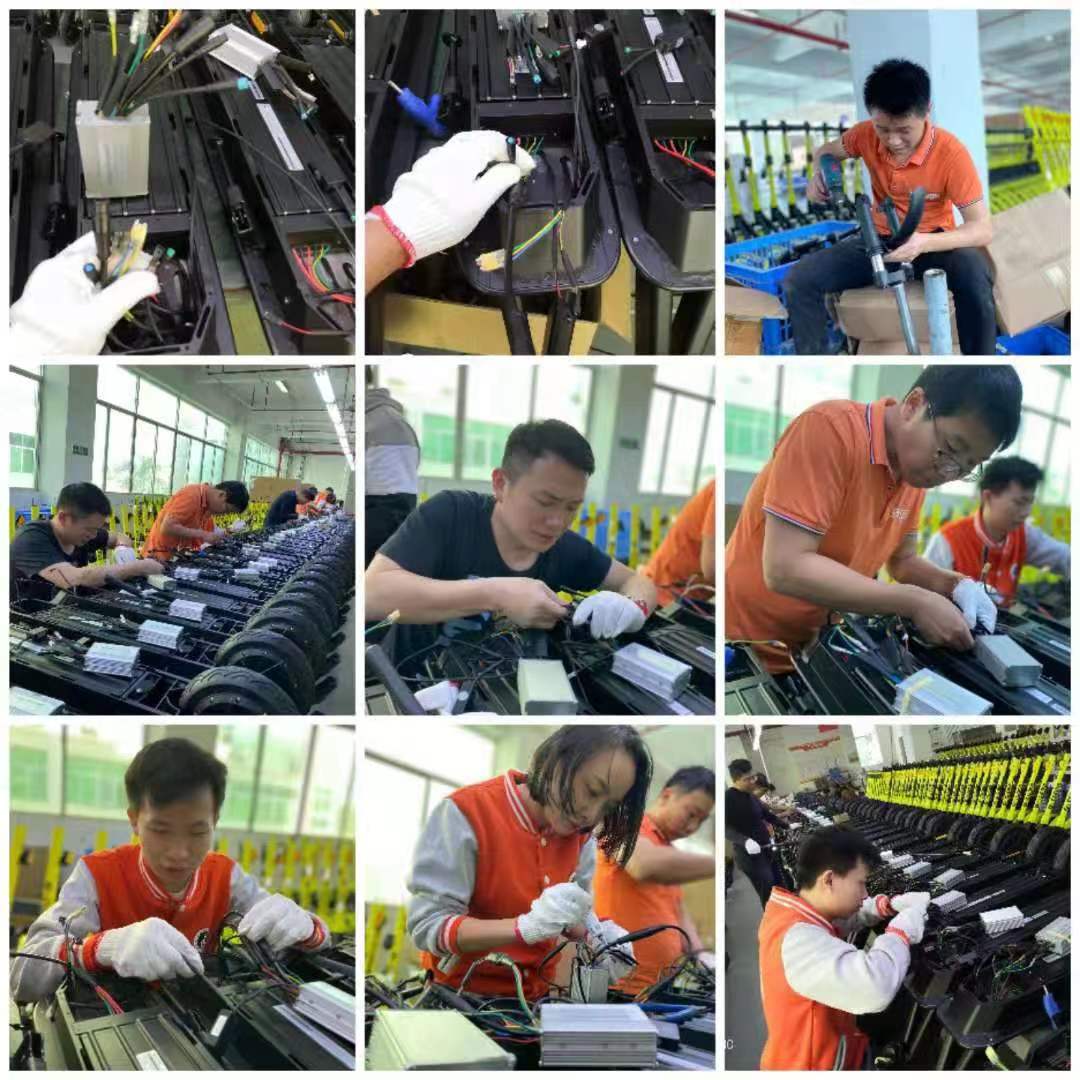
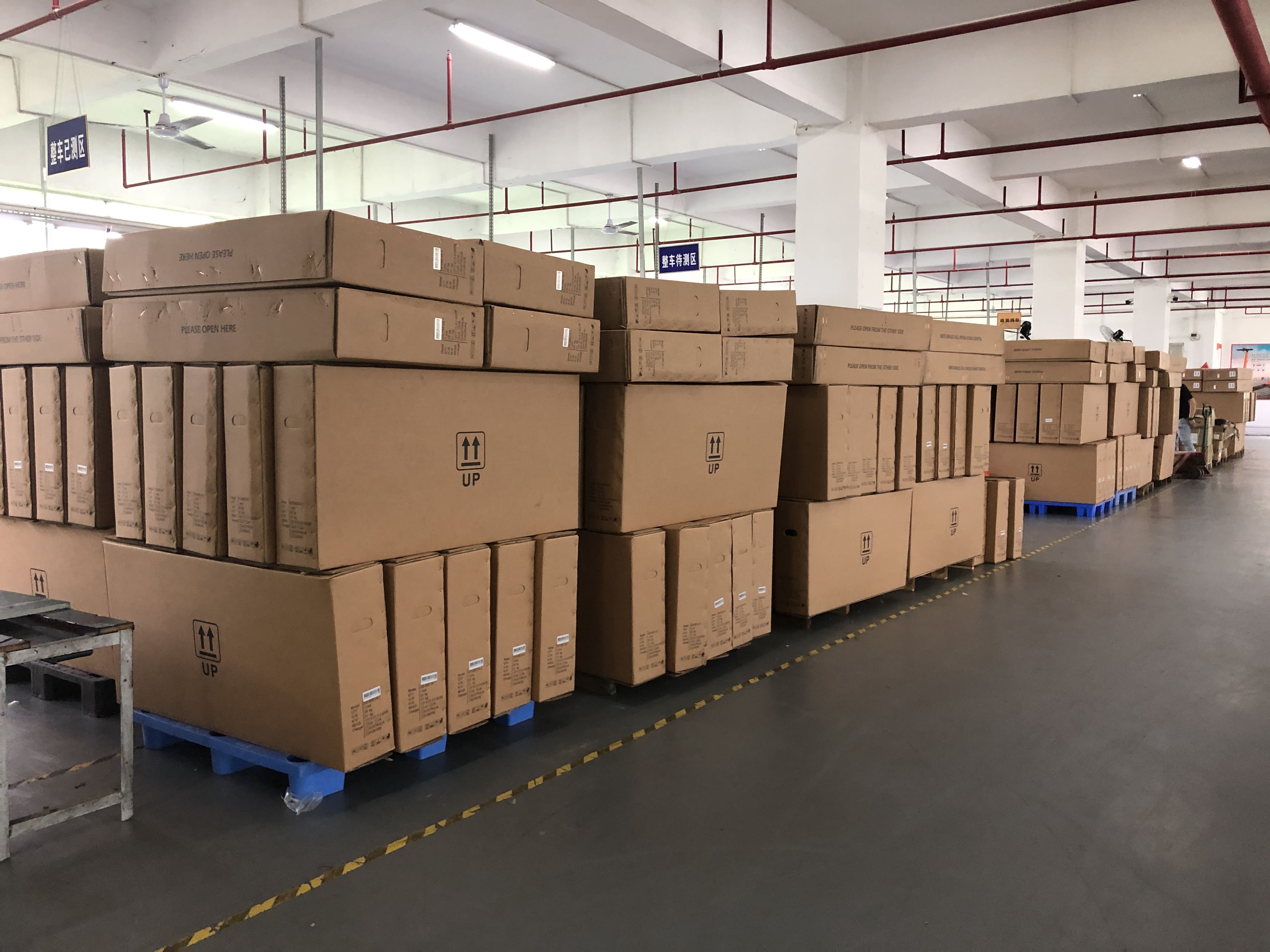
Chassis quality is only as good as the manufacturing and documentation behind it. Freego operates OEM and ODM production with stated MOQs of 50 units per model for OEM and 100 units per model for ODM, mixed orders within the same series calculable for OEM. OEM custom production from the China factory is quoted at 45-60 days, with spot customisation such as logo or packaging from the U.S. local warehouse at 3-8 business days. ODM projects are quoted at 15-20 days for design and prototyping and 50-70 days for mass production after design confirmation. Regular monthly capacity is stated as 2,000 units for OEM and 1,500 units for ODM, rising to 3,000+ and 2,500+ respectively at peak.
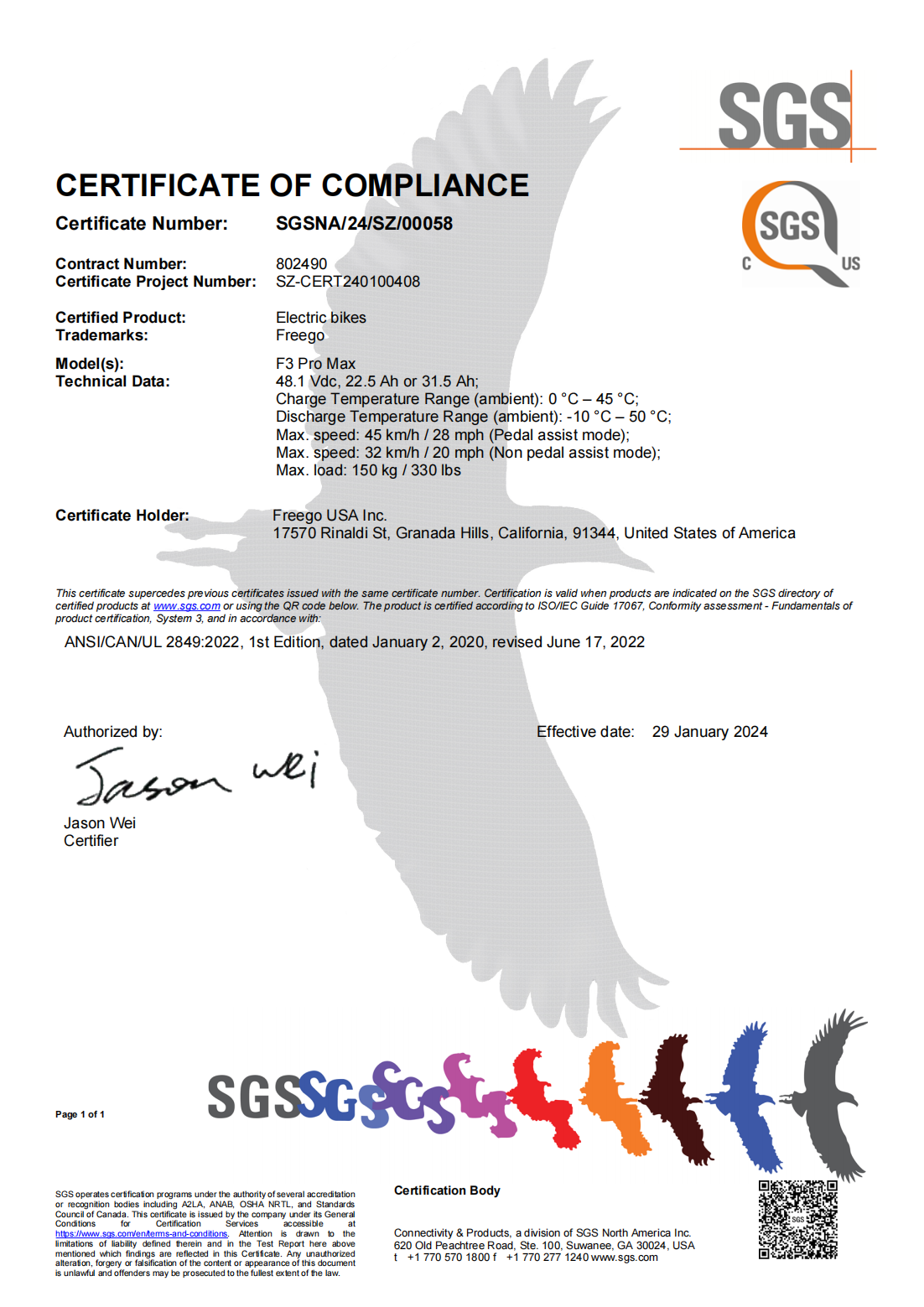
Quality control is stated as ISO 9001 system compliance with 100% incoming inspection of core parts, in-process patrol inspection and 100% full-function inspection before despatch, plus support for third-party inspection. For chassis-specific confidence, the documented programme includes frame fatigue testing and IPX6 waterproof testing within ODM development. Electrical safety documentation includes a UL 2849 test report (LTR24100903HS, issued 10 October 2024 by Guangdong Lintek Certification Group, to UL 2849:2020+R:2022-06+R:2022-12) covering the dirt bike models listed in the applicable scope, plus SGS certificates of compliance to ANSI/CAN/UL 2849-2022 (SGSNA/24/SZ/00059 and SGSNA/24/SZ/00058, issued 29 January 2024) and an FCC Supplier's Declaration of Conformity to FCC Part 15 Subpart B (HK2210194593E).
On commercial terms, a single unit is accepted for a sample display order, with 12 units (one full pallet) as the standard wholesale bulk order. Delivery options are U.S. local warehouse door-to-door, EXW Huizhou manufacturing factory, or FOB Shenzhen. Acceptance is defined as local service centre inspection plus compliance verification, with upfront payment for wholesale and a restocking arrangement. After-sales support is a two-year limited warranty covering the frame for two years and core electrical components for one year, U.S. local spare parts, remote technical guidance and access to authorised service centres.
Frequently Asked Questions
Does suspension or wheelbase affect whether a dirt ebike is street legal?
No. Legal classification follows power, the presence of operable pedals, speed capability and jurisdiction-specific rules, not frame geometry. In California, electrically powered two-wheelers above 750 W without operable pedals are treated as off-highway vehicles with registration and decal requirements, while U.S. CPSC summary material describes an electric bicycle as having operable pedals and a maximum speed below 20 mph on electric power alone. A manufacturer software preset is a configuration, not a legal determination. Build a written requirements file for each market you sell into and verify the classification of the exact model before advertising it as street legal.
Can a compact mid-drive model handle steep climbs and long desert runs?
Those are different jobs. A compact mid-drive such as the Nova 5 MINI is positioned for tight terrain, transport and shorter riders, where a short wheelbase and modest standover matter more than outright travel. Long-distance desert work pulls toward a longer wheelbase, greater usable travel and a chassis that stays composed at sustained speed, which is the positioning of models such as the X3 ultra-long range pedaled all-terrain build. Climbing ability depends on gearing, rear traction, rider position and damping as well as power, so test both candidate models on the same climb at the same sag rather than inferring from a power figure.
Where should a dealer spend budget first - more travel, better damping, or frame and brakes?
Sequence the spend rather than comparing headline items. Frame integrity and braking capacity come first, because they set the safety ceiling of every ride. Damping adjustment comes second, because unusable damping turns any amount of travel into a liability. Additional travel comes last, and only if the duty cycle genuinely demands it. In practice, a moderate-travel chassis with a properly rated spring, working rebound control and adequate brake thermal capacity will serve most trail and rental projects better than a longer-travel chassis that is under-damped for the riders who will actually use it.
What should a sample evaluation include before a fleet order?
Start with a written specification confirmation for the exact model and configuration. Then measure the physical sample: front and rear travel, axle-to-crown, head angle, chainstay, wheelbase at ride sag, bottom bracket height and standover. Set sag for a known rider, record every damper setting and photograph them. Run one slow technical loop, one open fast loop and one braking loop, and log bottom-out evidence, brake feel and rider comments on the same form for each candidate. A single unit is accepted as a sample display order, which makes this evaluation possible before a 12-unit pallet commitment.
How long does it take from geometry selection to fleet delivery?
It depends on which route you take. Spot orders from the U.S. local warehouse are quoted at 3-8 business days, including light customisation such as logo or packaging. OEM custom production from the China factory is quoted at 45-60 days with a 50-unit-per-model minimum, and ODM projects at 15-20 days for design and prototyping followed by 50-70 days for mass production after design confirmation, with a 100-unit-per-model minimum. Standard wholesale bulk orders start at 12 units, one full pallet. Once the chassis and configuration are locked, the fastest way to shorten the remaining distance is to open the sample conversation early - the Freego team can be reached through freegobikes.com, and the current product brochure is available for download at https://cdn.socialarks.com/sbsp//common/2026/0320/69bd03ca53074.pdf.

Conclusion
Travel, damping, wheelbase and geometry are not marketing adjectives; they are the variables that decide whether a dirt ebike suits the terrain it is sold into. The workable dealer method is unglamorous: define the duty cycle in percentages, define the rider envelope, demand the full geometry list in writing, measure the sample yourself, record a sag baseline, and test every candidate on the same three loops. That process converts a subjective ride impression into a specification decision that survives a repeat order.
Freego's catalogue supports that method by separating compact, medium-size, all-terrain and ultra-long-range families across hub-motor X series and mid-drive Nova series platforms, with documented OEM and ODM routes, U.S. warehouse stock and a compliance file covering UL 2849 and FCC requirements. What the catalogue cannot do is choose the terrain for you. Match the chassis to the ground the bike will actually cover, confirm every number before it reaches a customer, and the specification argument stops being about wattage.
Have Questions or Need More Details?
Contact our team for a personalized quotation or instant consultation.
Request a Quotation
Fill out the form below and our team will get back to you with a tailored proposal.
WhatsApp Direct Chat
Prefer to chat in real-time? Message us on WhatsApp for instant assistance & quick answers.
- Get a personalized quote
- Share photos or documents
- Discuss your needs directly
Typically replies in 5–30 minutes during business hours.