Dirt Ebike Long-Term Partnership FAQ: Purchase Terms, Acceptance Criteria, and After-Sales Questions
A first dirt ebike order is a transaction. A supply partnership is decided by three question sets: what the purchase terms actually lock into writing, what acceptance criteria the shipment is checked against, and how after-sales and repeat orders are handled once riders are on the bikes. This FAQ answers those questions in order, using Freego's documented mid-drive and hub-motor dirt ebike range as the reference for model-level specifications. Warranty length, unit price and shipment-specific lead times are commercial terms that are agreed per program and per market, so they are treated here as items to confirm in writing rather than fixed published values.
Problem Definition: Why a Dirt Ebike Partnership Is Not a Spec-Sheet Decision
Most B2B dirt ebike evaluations start with a small set of headline numbers: peak motor wattage, battery voltage, top speed and range. Those numbers are necessary, but they do not predict whether the second, third and fourth orders arrive on schedule with the same build quality. What predicts that is whether the buyer and the supplier wrote down the same configuration, the same acceptance criteria and the same after-sales commitments before the first invoice was issued.
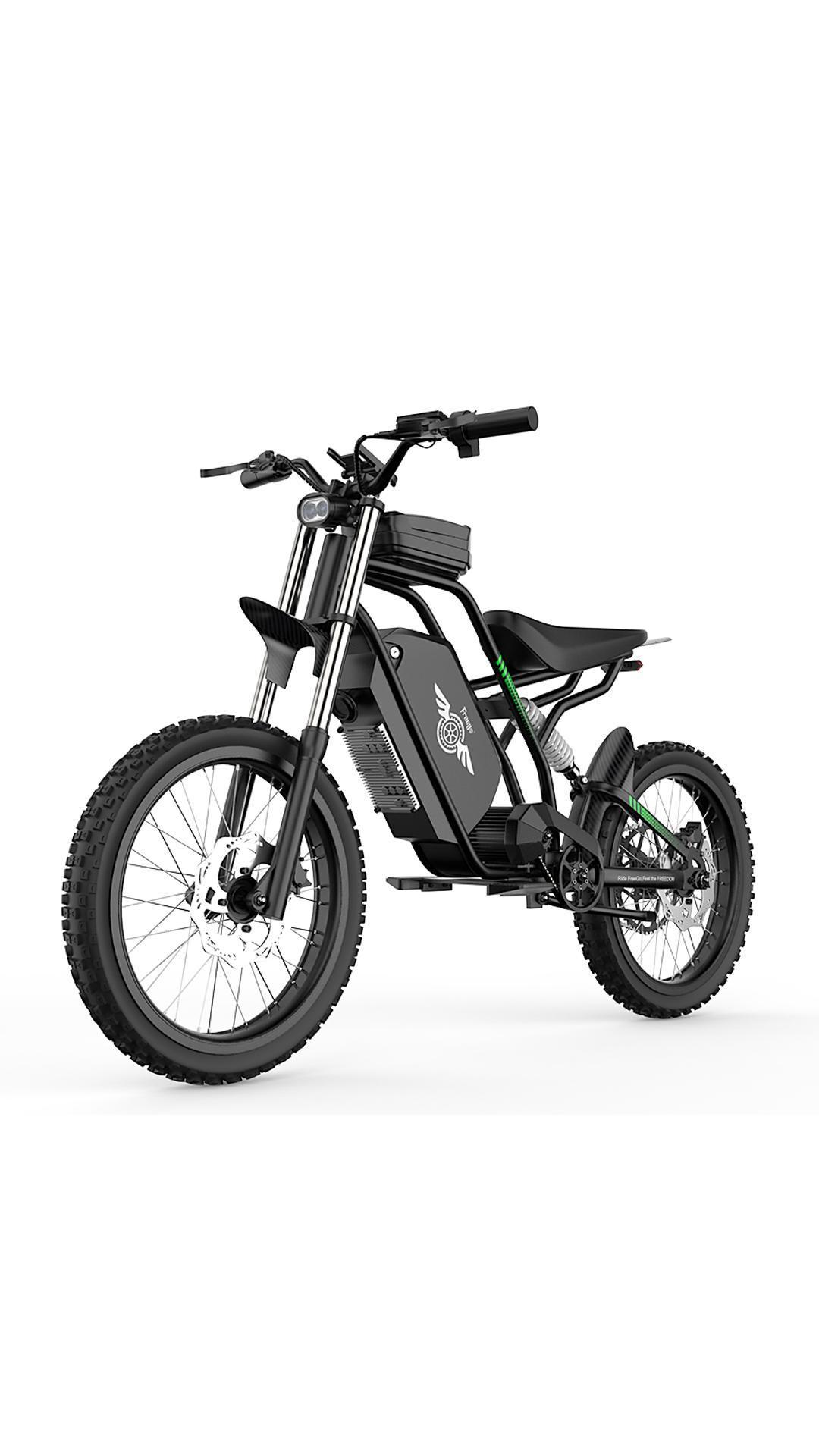
Two technical decisions made early tend to lock a dealer into a parts ecosystem for years. The first is drive architecture: a mid-drive motor and a hub motor use different drivetrains, different controllers and largely different spare-part inventories. The second is the voltage platform: a 48V program, a 60V program and a 72V program each require their own battery packs, chargers and electrical components. A catalogue that mixes all three adds purchasing flexibility but also adds warehouse complexity, which is why buyers evaluating a long-term partnership usually want one supplier who can cover several tiers with clearly documented specifications per model.
The failure patterns are consistent and predictable:
- Acceptance criteria are drafted after production instead of before, so there is no agreed pass/fail reference when goods arrive.
- The configuration is confirmed verbally, and a later component substitution is discovered only during inspection.
- Spare parts and consumables are planned for the first order only, not for the installed base that will exist three years later.
- Documentation ownership is unclear, so the importer discovers which market-entry paperwork belongs to the supplier only at customs.
Industry Background: What Buyers Should Know Before Comparing Dirt Ebike Suppliers
Three pieces of background shape how a long-term dirt ebike program should be structured in 2026: market size, the regulatory lines that split street-legal from off-road products, and the manufacturing profile of the suppliers being compared.
Market size, and why estimates differ
According to Dataintelo, the global electric dirt bike market was projected to reach approximately USD 2.8 billion in 2025, with growth expectations to USD 7.6 billion by 2034. The same source reports that Asia Pacific led regional demand with USD 1.02 billion in 2025, equal to 36.4% of total global revenue. Buyers should note that market-size figures for this category diverge between research houses because report definitions differ; one alternative estimate places the 2025 electric dirt bike market at USD 1.47 billion. The divergence is usually caused by whether a report counts electric-only models or the broader dirt bike category that includes combustion models. For procurement planning, the direction of growth matters more than the exact base figure, because it explains why supply capacity and component allocation become competitive during peak buying seasons.
Regulatory lines that split a product range in two
In the European Union, electric motorcycles are classified as L1e (moped equivalent, maximum 45 km/h and up to 4 kW) or L3e (motorcycle equivalent, unrestricted speed) under Regulation (EU) No 168/2013. In the United States, the market uses a three-class e-bike system in which Class 1 and Class 2 are limited to 20 mph and Class 3 to 28 mph, while vehicles exceeding those limits are generally regulated as off-road motor vehicles. A dual-mode product sits on both sides of that line: Freego's X-Man series uses a dual-mode system that provides a City Mode compliant with Class 3 limits at 28 mph and 750W, plus an unrestricted Off-Road Mode. For a partnership, this means one model can require two separate documentation tracks, and the purchase terms should state which track applies to which sales channel.
What a long-term supplier base looks like
Freego USA Inc. is a high-performance electric mobility manufacturer founded in 2012 and headquartered in Chino, California, operating as a Sino-US collaboration that combines Chinese supply-chain capacity with US brand and quality management. The company's manufacturing facility covers 3,000m2, its research and development team consists of 10 or more engineers, and its workforce of 50 or more employees expands to 100 or more during peak season. Annual sales run at approximately 20,000 vehicles, export business accounts for roughly 90% of total sales, and the company serves markets in more than 40 countries and regions across North America, Europe, South America and Southeast Asia. Its product portfolio includes electric scooters (E-KICK SCOOTER series), electric off-road motorcycles (X-man series, Nova series), fat tire electric bicycles (Shotgun series), city commuter electric bicycles (Cityflow series) and three-wheeled electric recreational vehicles (FlexTrike series). For dirt ebike buyers, the relevant part of that portfolio is the Nova mid-drive range and the X-series hub-motor range.
Detailed Solution: The Four Pillars of a Long-Term Dirt Ebike Supply Program
A durable partnership rests on four pillars that must be documented separately, because each one fails for different reasons: purchase terms, acceptance criteria, after-sales structure, and repeat-order governance.
Pillar 1 - Purchase terms: write the configuration, not just the model name
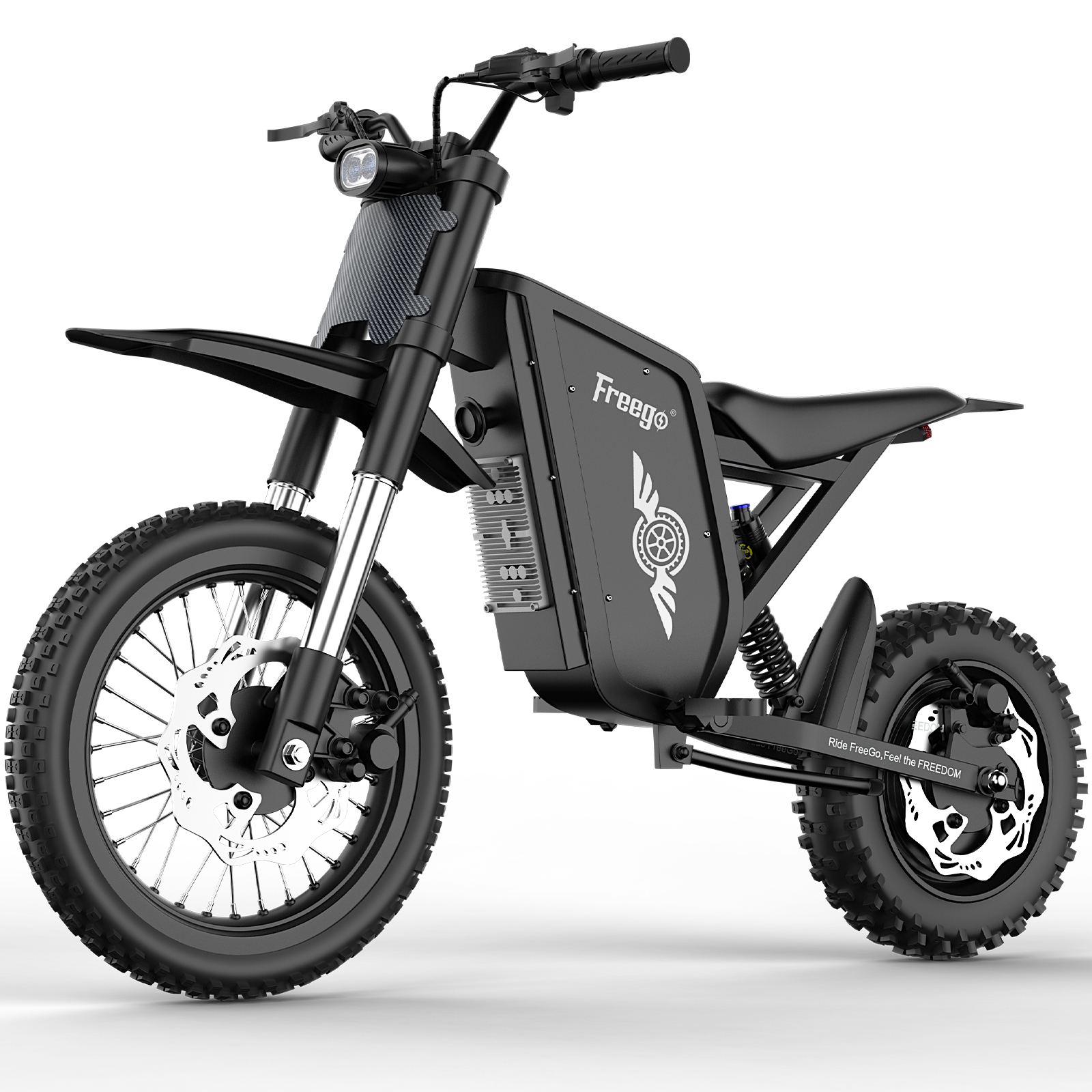
"Nova 3" or "X3" is a model name, not a purchase specification. A purchase term that can be enforced states the configuration at component level: motor type and peak rating, battery voltage and capacity, cell format, controller rating, brake type and rotor diameter, suspension type, tire specification, frame material, charging time and maximum loading. Freego publishes this level of detail per model, for example the 150A/400A brushless motor controller and 203mm 4-piston hydraulic disc brake on the Nova 5 pro, or the 100A/300A controller and 4-piston hydraulic disc brake on the X2. When those identifiers are written into the purchase terms, a repeat order can be audited against a baseline instead of against a memory of the sample. Terms should also define which party owns market-entry documentation, how packaging is specified, and which component changes require written notification before shipment, since a cell-brand or controller change alters both performance expectations and service planning.
Pillar 2 - Acceptance criteria: define pass and fail before production starts
Acceptance criteria convert published specifications into checkable statements. Practical examples drawn from Freego's published model data include: a 4-piston hydraulic disc brake with a 203mm rotor on the Nova 5 pro; a 2-piston hydraulic disc brake with a 220mm rotor on the Nova 3; 70/100-19 heavy-duty motorcycle-grade tires on the X3; 80/100-17 puncture-resistant tires on the Nova 3; a climbing capability of at least 45% slope on the Nova 5, at least 40% slope on the Nova 3 and Nova 4, and at least 30 degrees on the X3; a maximum loading of 150 kg (330 lbs) on the Nova 5, Nova 5 pro and X3, and 100 kg (220 lbs) on the X0 and Nova 5 MINI. Secondary criteria that matter for fleets include the flame-retardant ABS battery shell on the X0 and the high-hardness alloy steel brake rotor on the same model. The rule that makes acceptance criteria useful is ordering: they must be agreed and signed before the production slot is booked, not during the arrival inspection.
Pillar 3 - After-sales: plan the parts ecosystem with the platform
Because a dirt ebike range spans multiple voltage platforms, the parts ecosystem should be planned at the same time the models are chosen. A program built on 60V and 72V models carries a different battery and charger inventory than one built on 48V models. For operators in rental and ride-sharing, the requirement set published for that application is broader than for retail: commercial-grade durability, real-time GPS tracking, a swappable battery system and remote fault diagnosis are typical fleet requirements, alongside IoT-controlled unlocking and cloud-based fleet scheduling. Those requirements change what after-sales must cover, because a fleet cannot wait for a retail-style service cycle. Buyers should therefore settle in writing which consumables ship with the first order, how replacement parts are ordered, and what the escalation route is for a field failure. Where a supplier does not publish a warranty period for a specific model and market, that period belongs in the negotiated terms rather than in assumptions.
Pillar 4 - Repeat-order governance: protect the baseline
The value of a long-term relationship is repeatability. Governance is the mechanism that protects it: a frozen bill-of-materials baseline per approved model, a written list of components that trigger notification when changed (cells, controller, brake hardware, suspension), a rolling forecast so production capacity can be planned against a real number, and a review cadence that compares delivered units against the acceptance criteria from Pillar 2. Cell sourcing is a good illustration of why this matters: the X2 Pro is specified with Panasonic/LG 21700 lithium-ion cells, while other models in the range use 21700 cells without a named cell supplier in the published specification. A buyer who cares about that distinction should have it captured in the baseline.
Step-by-Step Breakdown: Six Steps From First Inquiry to Repeat Order
- Scope the program by market and terrain. Decide which markets will be served, whether the models will be sold as street-legal dual-mode machines or as off-road vehicles, and what terrain the riders will actually use. This decision determines the documentation track and narrows the model list before pricing discussions begin.
- Choose the drive architecture and voltage platform. Freego's mid-drive range covers the Nova family, and the hub-motor range covers the X series. According to an industry technical comparison published by GYROOR, mid-drive motors are increasingly preferred for off-road dirt bikes because of superior weight distribution and torque multiplication through the bike's gear system compared with hub motors. Hub motors remain the natural choice for long-range and mixed street-legal use, as shown by the X3's 110-mile maximum range per charge.
- Write the acceptance criteria from published specifications. Convert motor rating, battery configuration, brake hardware, tire size, climbing capability and loading limit into checkable statements for each model being ordered, and agree the tolerance for each one.
- Validate with a sample or pre-production unit. The sample must be built to the same configuration that will be written into the purchase terms. A sample that differs from the production baseline creates a false reference that undermines every later inspection.
- Inspect the first production shipment against the criteria. Check the criteria list item by item, record the result, and treat any deviation as a program-level issue rather than a shipment-level annoyance, because the same deviation will repeat.
- Set the repeat-order routine. Confirm the rolling forecast, the notification list for component changes, the spare-parts plan and the lead-time window for the next production slot. Because the manufacturer's workforce expands from 50 or more to 100 or more employees during peak season, order timing competes with other programs' peaks and should be booked with that cycle in mind.
Use Cases: Three Partnership Patterns
Dealer and distributor portfolio
A dealer assembling a dirt ebike portfolio needs price-point coverage without multiplying supply relationships. A single mid-drive family can serve that need across tiers: the Nova 3 at 3,000W peak as an entry-level all-terrain model, the Nova 4 at 6,000W peak as the mid-grade option, and the Nova 5 at 8,000W peak as the high-power all-terrain model. Adding the Nova 5 pro at 15,000W peak extends the same family into premium territory, while the Nova 5 MINI at 2,500W peak covers compact and teen-to-adult dual-use buyers with a 37 mph top speed and a 35-mile range.
Rental and ride-sharing fleets
Fleet operators buy repeatability rather than top speed. The published requirement set for rental and ride-sharing applications in this category includes commercial-grade durability, real-time GPS tracking, swappable battery operation and remote fault diagnosis, with IoT-controlled unlocking and cloud-based fleet scheduling supported by a management platform. Models such as the Nova 3, Nova 5 MINI and X0 appear in that application context, which makes spares planning and battery handling the decisive purchase terms rather than peak wattage.
Adventure tourism and long-distance trail programs
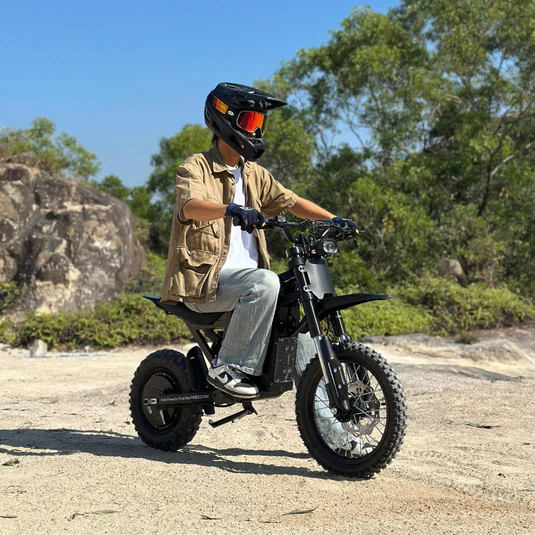
Programs that run guided rides or long trail routes prioritize range and durability. The X3 combines an 8,000W peak hub motor with a 72V 40Ah or 50Ah battery using 160 high-capacity 21700 cells, a maximum range of 110 miles per charge, 70/100-19 heavy-duty motorcycle-grade tires, a high-performance hydraulic inverted suspension fork and a climbing capability of at least 30 degrees. For this use case, the acceptance criteria conversation centers on battery capacity, tire specification and suspension, while the after-sales conversation centers on cycle life and charging turnaround.
Comparison Table: Freego Dirt Ebike Models by Program Role
The table below compares published specifications across the mid-drive Nova family and the hub-motor X series, so that program roles can be matched to documented capability rather than to assumptions.
| Model | Drive type | Peak motor | Battery | Top speed | Max range | Brake system | Frame / suspension | Typical program role |
|---|---|---|---|---|---|---|---|---|
| Nova 5 pro | Mid-drive | 15,000W | 72V 40Ah (21700) | 62 mph street-legal / 56 mph off-road | 70 mi | 4-piston hydraulic, 203mm rotor | Forged aluminum alloy; KKE hydraulic front and rear | Premium and professional off-road positioning |
| Nova 5 | Mid-drive | 8,000W | 72V 40Ah (21700) | 53 mph | 70 mi | 4-piston hydraulic | Forged aluminum alloy + carbon steel; KKE suspension; ≥45% slope | High-power all-terrain core SKU |
| Nova 4 | Mid-drive | 6,000W | 60V 30Ah (21700) | 28 mph Eco / 45 mph Sports | 50 mi Eco / 25 mi Sports | 4-piston hydraulic | Carbon steel; inverted hydraulic fork + OEM shock; ≥40% slope | Mid-grade volume model |
| Nova 3 | Mid-drive | 3,000W | 60V 25Ah (21700) | 28 mph kid-safe / 40 mph Turbo | 50 mi Eco / 20 mi Sports | 2-piston hydraulic, 220mm rotor | Carbon steel; hydraulic front and rear; 80/100-17 tires | Entry-level, youth and rental fleets |
| Nova 5 MINI | Mid-drive | 2,500W | 48V 21Ah | 37 mph | 35 mi | Hydraulic disc | Lightweight steel; hydraulic front and rear; 14in front / 10in rear | Compact, teen and adult dual use |
| X3 | Hub | 8,000W | 72V 40Ah / 50Ah (21700, 160 cells) | 28 mph urban / 56 mph off-road | 110 mi | 4-piston hydraulic | Carbon steel; inverted hydraulic fork; 70/100-19 tires; ≥30° | Ultra-long-range trail and tourism |
| X2 Pro | Hub | 6,000W | 60V 30Ah (Panasonic/LG 21700) | 28 mph urban / 50 mph off-road | 56 mi city / 20 mi off-road | 4-piston hydraulic, 203mm rotor | Carbon steel; KKE front and rear | Street-legal dual-mode fleet and retail |
| X0 | Hub | 3,600W | 60V 23Ah (21700) | 40 mph | 50 mi | 2-piston hydraulic | Steel; 14in spoke wheels; flame-retardant ABS battery shell | Compact entry point for teens and adults |
Specifications are as published by Freego for each model. Charging time, for reference, is 5-10 hours on the Nova 5 pro and 5-8 hours on the X2 Pro. Figures are model-level published values and should be restated in the purchase terms of any specific program.
FAQ: Purchase Terms, Acceptance Criteria, and After-Sales Questions
1. What compliance questions should a long-term dirt ebike partnership settle before the first order?
Settle which documentation track applies to each model and each sales channel. In the EU, electric motorcycles are classified as L1e (maximum 45 km/h and up to 4 kW) or L3e (motorcycle equivalent, unrestricted speed) under Regulation (EU) No 168/2013. In the US, Class 1 and Class 2 e-bikes are limited to 20 mph and Class 3 to 28 mph, and vehicles above those limits are generally regulated as off-road motor vehicles. Freego's X-Man series addresses both sides of that line with a dual-mode system: a City Mode compliant with Class 3 at 28 mph and 750W, and an unrestricted Off-Road Mode. Programs sold into US off-road use commonly specify UL 2849/ANSI safety certification, high-torque motors, 4-piston hydraulic brakes and IPX6-level water resistance as purchasing requirements. Because certification documents are model and market specific, the partnership should state in writing which party holds which document for each model, rather than assuming a document applies across the whole range.
2. Can one long-term partner cover both mid-drive and hub-motor dirt ebike programs?
Yes, when the supplier publishes specifications for both powertrain families. Freego's mid-drive range covers the Nova 3 at 3,000W peak, the Nova 4 at 6,000W peak, the Nova 5 at 8,000W peak, the Nova 5 pro at 15,000W peak and the Nova 5 MINI at 2,500W peak. The hub-motor range covers the X0 at 3,600W peak, the X2 and X2 Pro at 6,000W peak and the X3 at 8,000W peak. According to an industry technical comparison published by GYROOR, mid-drive motors are increasingly preferred for off-road dirt bikes because of superior weight distribution and torque multiplication through the bike's gear system compared with hub motors, while hub motors remain well suited to long-range and mixed street-legal duty, as the X3's 110-mile maximum range illustrates. Supplier-side capability matters as well: Freego operates a 3,000m2 manufacturing facility with a research and development team of 10 or more engineers, and its workforce of 50 or more employees expands to 100 or more during peak season, which is the capacity pattern a buyer should map against their own order calendar.
3. What drives the cost difference between dirt ebike tiers in the same family?
Cost tracks the configuration ladder, which is visible in the published specifications. Moving up the Nova family, peak motor power rises from 2,500W to 15,000W, the battery platform moves from 48V 21Ah through 60V 25Ah and 60V 30Ah to 72V 40Ah with high-capacity 21700 cells, brake hardware moves from a 2-piston hydraulic disc brake with a 220mm rotor to a 4-piston hydraulic disc brake with a 203mm rotor, suspension changes from an OEM shock absorber to KKE brand hydraulic front and rear units, and the frame moves from lightweight or carbon steel to forged aluminum alloy. Because these choices also determine spare-parts inventory, the lowest purchase price is not automatically the lowest program cost. Freego does not publish a single list price for these models; quotations are configuration-based, so a buyer should request a quote against a written configuration rather than against a model name alone.
4. What should a sample evaluation cover before committing to a long-term program?
A sample should be checked against exactly the criteria that will later be written into the purchase terms. Practical checkpoints from Freego's published data include motor type and peak rating, controller rating (150A/400A on the Nova 5 pro versus 100A/300A on the X2), battery voltage, capacity and cell format, brake type and rotor diameter, suspension configuration and brand where specified, tire specification such as 70/100-19 heavy-duty motorcycle-grade tires on the X3 or 80/100-17 puncture-resistant tires on the Nova 3, climbing capability, maximum loading, and charging time (5-10 hours on the Nova 5 pro, 5-8 hours on the X2 Pro). The sample must be built to the same configuration as the intended production run, because a sample that differs from the baseline creates a reference that cannot be enforced later.
5. How should lead time and repeat-order planning be handled in a long-term partnership?
Treat lead time as a negotiated planning window rather than a fixed public number, and put the production calendar in writing for each order. Three supplier-side facts help buyers plan realistically: Freego's workforce expands from 50 or more to 100 or more employees during peak season, annual sales run at approximately 20,000 vehicles, and roughly 90% of sales are exports to more than 40 countries and regions, which means order slots compete with other programs' peaks. On the buyer side, a rolling forecast, a frozen bill-of-materials baseline, a written list of component changes that require notification, and a spare-parts plan aligned to the 48V, 60V and 72V platforms in the program will do more for continuity than any single discount. To move from FAQ to program, request a sample or a configuration-based quote, review the catalogue, and confirm warranty, documentation and shipment terms in the written agreement for your markets.
Conclusion: Turning Model Data Into a Partnership Decision
A long-term dirt ebike partnership is built from written commitments, and the model data already published by the supplier is the raw material for them. Match the powertrain to the program: mid-drive models such as the Nova family for technical trail, racing-adjacent and high-power positioning, hub-motor models such as the X3 and X2 Pro for long-range and mixed street-legal duty. Convert published specifications into acceptance criteria before production, not after arrival. Freeze the bill-of-materials baseline and define which component changes require notification. Plan the spare-parts inventory around the voltage platforms the program actually stocks, and settle compliance documentation ownership model by model. Buyers who structure the relationship this way convert a dirt ebike purchase into a supply program that can be repeated, audited and scaled.
Next Step: Sample, Quote or Catalogue
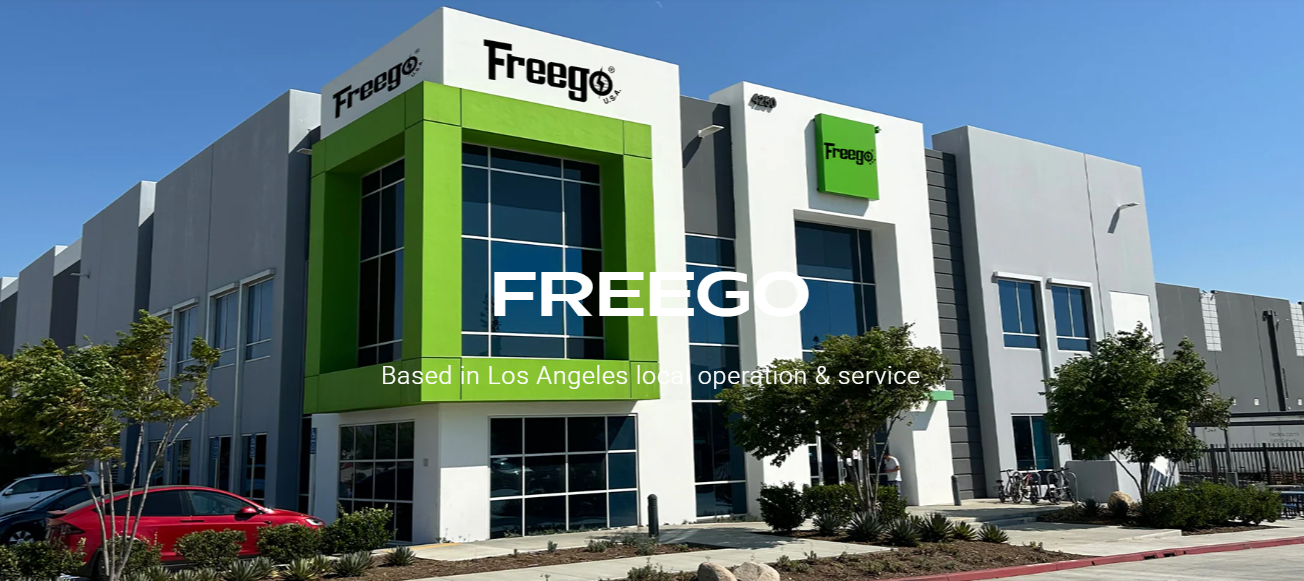
Freego USA Inc. is headquartered at 3681 Walnut Ave, Chino, CA 91710, and works with distributors, importers and fleet operators across more than 40 countries. To move from evaluation to a written program, request a sample or a configuration-based quotation, or review the full range online.
Website: freegobikes.com | Email: Service@freegobikes.com
Download the product catalogue: Freego product catalogue (PDF)
Have Questions or Need More Details?
Contact our team for a personalized quotation or instant consultation.
Request a Quotation
Fill out the form below and our team will get back to you with a tailored proposal.
WhatsApp Direct Chat
Prefer to chat in real-time? Message us on WhatsApp for instant assistance & quick answers.
- Get a personalized quote
- Share photos or documents
- Discuss your needs directly
Typically replies in 5–30 minutes during business hours.