Premium vs Mid-Grade vs Entry-Level Mid-Drive Dirt Ebikes: A Fleet Buyer's Comparison
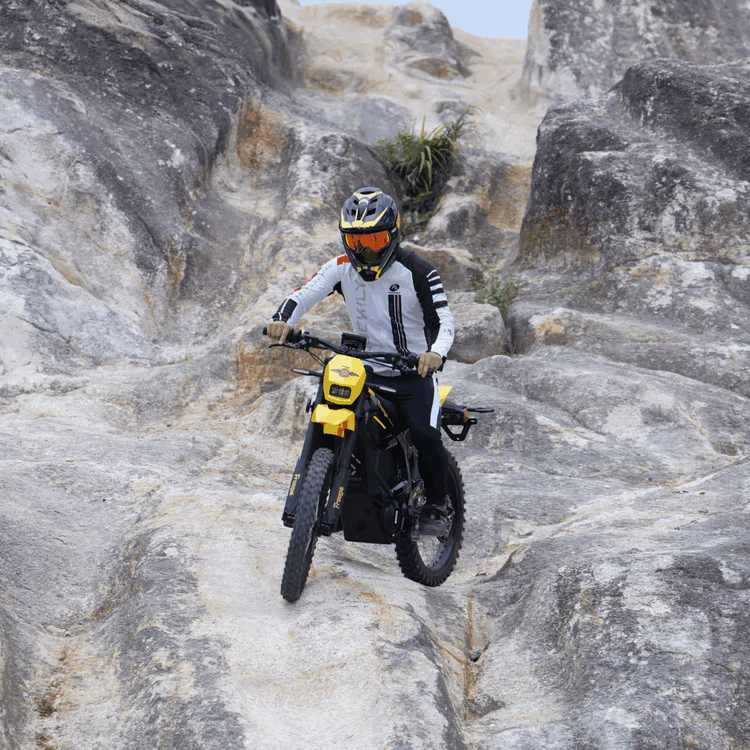
Answer first: a fleet buyer is not choosing a bike — they are choosing a duty rating. Freego builds three mid-drive dirt ebike tiers for commercial use: the Premium Pro-Grade Mid-Drive (Nova 5 pro), the Mid-Grade Mid-Drive (Nova 4), and the Entry-Level Mid-Drive All-Terrain (Nova 3). The differences between them are measurable, not cosmetic: peak motor output runs from 3,000W to 15,000W, battery architecture moves from 60V to 72V, braking hardware moves from a 2-piston caliper to a 4-piston caliper, and the frame moves from high-strength carbon steel to high-strength forged aluminum alloy.
This comparison is written for rental operators, adventure-tourism companies, dealer groups, and site-based fleet managers who are in the Evaluation-to-Execution stage: they have already decided that a mid-drive motor dirt ebike fits their operation and now need to decide which tier goes on which route, for which rider, under which business model. Every specification in this article is drawn from published Freego product and certification documentation.
Why Tier Selection Goes Wrong in Fleet Procurement
The most common fleet failure is not buying the wrong brand — it is buying the wrong tier mix. Three patterns repeat across rental and recreation fleets.
- Over-specifying the entry routes. A guided beginner loop that never exceeds moderate gradient does not need a 72V high-voltage dirt ebike with a 15000W motor. It needs a machine that survives high cycle counts, is easy to recover after a fall, and has a simple service footprint.
- Under-specifying the premium routes. Placing an entry tier on a steep-slope climbing dirt ebike route creates repeat recovery calls, brake fade complaints, and refund requests — the operating cost lands in labour, not in the purchase order.
- Treating tiers as status rather than duty cycle. Tier labels describe hardware capability. They do not describe rider ability, terrain severity, or how many hours a day the unit will run.
The practical fix is to stop comparing tiers on headline top speed and start comparing them on the four variables that change between them: motor output and its torque delivery through the drivetrain, battery voltage and capacity, brake and suspension hardware, and frame construction. Those four variables determine what a unit can do repeatedly, not what it can do once.
The 2026 Context: Market Growth, Regulation, and the Mid-Drive Shift
Demand context matters because it shapes what fleets are being asked to deliver. The global electric dirt bike market is projected at approximately USD 2.8 billion in 2025, with growth expectations to USD 7.6 billion by 2034 (Dataintelo). Asia Pacific led regional demand with USD 1.02 billion in 2025, accounting for 36.4% of total global revenue (Dataintelo). Estimates across research houses vary by scope, so treat these figures as directional market sizing rather than a single consensus number.
Regulation remains the constraint that decides which machines can be deployed where. In the EU, electric motorcycles fall under Regulation (EU) No 168/2013, with L1e covering moped-equivalent vehicles up to 45 km/h and 4 kW, and L3e covering motorcycle-equivalent vehicles without that speed restriction. In the US, e-bikes are generally managed through a three-class system — Class 1 and Class 2 capped at 20 mph, Class 3 at 28 mph — and vehicles exceeding those limits are generally regulated as off-road motor vehicles. For fleet buyers, this means the same mid-drive platform can be a road-legal asset, a closed-course asset, or a private-land asset depending on configuration and jurisdiction.
On the technical side, mid-drive motors are increasingly preferred for off-road use because they concentrate mass near the centre of the bike and multiply torque through the bike's own gear system, rather than driving the wheel directly as a hub motor does. That torque multiplication is the reason a mid-drive dirt ebike can hold a climbing line at lower motor output than an equivalent hub-drive machine.
Freego USA Inc. is a Chino, California–headquartered electric mobility manufacturer founded in 2012 that designs and builds electric scooters, off-road electric motorcycles (X-man and Nova series), fat-tire e-bikes, commuter e-bikes, and three-wheeled recreational vehicles. The company operates a 3,000 m² factory with a 10+ engineer R&D team, exports roughly 90% of output to more than 40 countries and regions, and holds a documented certification file covering UL 2849 and FCC conformity for its e-bike platforms (freegobikes.com).
The Three Mid-Drive Tiers, Defined
All three tiers share the same commercial logic: a mid-drive motor, a dual-mode speed architecture, 21700 lithium-ion cells, hydraulic braking, and full suspension. What changes is how much of each. The specifications below are taken from Freego's published product sheets.
Entry-Level Mid-Drive All-Terrain — Nova 3
- Peak motor power: 3,000W mid-drive brushless motor with 2-stage speed reduction chain drive
- Battery: 60V, 25Ah lithium-ion 21700 cells
- Top speed: 28 MPH (kid-safe mode) / 40 MPH (turbo mode)
- Max range: 50 MI (Eco) / 20 MI (Sports)
- Max loading: 120 KG (264 LBS)
- Braking: 2-piston hydraulic disc brake with 220 mm rotor
- Suspension: Hydraulic front and rear shock absorbers
- Frame and tires: High-strength carbon steel frame; 80/100-17 fat puncture-resistant tires
- Climbing capacity: ≥40% slope
- Published application scope: powersports and outdoor recreation, rental and ride-sharing, youth outdoor sports
The entry tier's defining feature for fleet use is the split speed architecture: a restrained mode for supervised or junior riders and a turbo mode for adult riders on the same chassis. That flexibility is why this tier suits mixed-ability rental pools and youth programmes, where one asset type has to cover several rider profiles.
Mid-Grade Mid-Drive — Nova 4
- Peak motor power: 6,000W mid-drive motor with 2-level speed reduction
- Battery: 60V, 30Ah lithium-ion 21700 cells
- Top speed: 28 MPH (Eco) / 45 MPH (Sports)
- Max range: 50 MI (Eco) / 25 MI (Sports)
- Max loading: 120 KG (264 LBS)
- Braking: 4-piston hydraulic disc brake
- Suspension: Hydraulic inverted suspension fork plus OEM shock absorber
- Frame and tires: High-strength carbon steel frame; 70/100-19 front and 80/100-17 rear motorcycle-grade tires
- Climbing capacity: ≥40% slope
- Published application scope: powersports and outdoor recreation, rental and ride-sharing, outdoor adventure tourism
The mid tier doubles motor output and battery capacity over the entry tier and upgrades the front end to an inverted fork — the configuration that typically matters most on rocky descents and repeated braking zones, where fork stiffness and 4-piston hydraulic brake dirt ebike hardware control fade and rider fatigue.
Premium Pro-Grade Mid-Drive — Nova 5 pro
- Peak motor power: 15,000W mid-drive motor with a 150A/400A high-power brushless motor controller
- Battery: 72V, 40Ah lithium-ion 21700 cells
- Top speed: 62 MPH (street-legal configuration) / 56 MPH (off-road configuration)
- Max range: 70 MI per charge
- Max loading: 150 KG (330 LBS)
- Braking: 4-piston hydraulic disc brake with 203 mm rotor
- Suspension: Premium KKE brand hydraulic front and rear shock absorbers
- Frame and tires: High-strength forged aluminum alloy frame; ultra-tough all-terrain puncture-resistant tires
- Charging time: 5–10 hours
- Published application scope: powersports and outdoor recreation, professional off-road sports, outdoor adventure tourism
The premium tier changes the class of machine, not just the number. Forged aluminum alloy replaces carbon steel, the controller rating rises to 150A/400A, and the published maximum load rises to 150 KG. This is the tier aimed at professional off-road sports and high-value guided experiences where the unit is expected to run at high output for extended sessions.
Two adjacent mid-drive options worth knowing: the Freego Nova 5 (8,000W mid-drive, 72V 40Ah, 53 MPH, 70 MI range, ≥45% slope, KKE suspension) sits between the mid and premium tiers, and the Nova 5 MINI (2,500W mid-drive, 48V 21Ah, 37 MPH, 35 MI, 14" front / 10" rear wheels, 100 KG loading) is a compact mid-drive platform for tighter courses and smaller riders. They are not part of the three-tier ladder below but frequently appear in the same fleet plan.
Specification Comparison: Nova 3 vs Nova 4 vs Nova 5 pro
| Attribute | Nova 3 — Entry-Level Mid-Drive All-Terrain | Nova 4 — Mid-Grade Mid-Drive | Nova 5 pro — Premium Pro-Grade Mid-Drive |
|---|---|---|---|
| Peak motor power | 3,000W mid-drive brushless | 6,000W mid-drive | 15,000W mid-drive |
| Battery | 60V, 25Ah 21700 lithium-ion | 60V, 30Ah 21700 lithium-ion | 72V, 40Ah 21700 lithium-ion |
| Top speed | 28 MPH (kid-safe) / 40 MPH (turbo) | 28 MPH (Eco) / 45 MPH (Sports) | 62 MPH (street-legal) / 56 MPH (off-road) |
| Max range | 50 MI (Eco) / 20 MI (Sports) | 50 MI (Eco) / 25 MI (Sports) | 70 MI per charge |
| Max loading | 120 KG (264 LBS) | 120 KG (264 LBS) | 150 KG (330 LBS) |
| Brake system | 2-piston hydraulic disc, 220 mm rotor | 4-piston hydraulic disc | 4-piston hydraulic disc, 203 mm rotor |
| Suspension | Hydraulic front & rear shock absorbers | Hydraulic inverted fork + OEM shock | Premium KKE hydraulic front & rear |
| Frame | High-strength carbon steel | High-strength carbon steel | High-strength forged aluminum alloy |
| Drivetrain | 2-stage speed reduction chain drive | Mid-drive with 2-level speed reduction | Mid-drive with 150A/400A controller |
| Climbing capacity | ≥40% slope | ≥40% slope | Not stated in the published spec sheet |
| Charging time | Not stated in the published spec sheet | Not stated in the published spec sheet | 5–10 hours |
The table is deliberately literal. Where a published figure does not exist for a tier, the cell says so rather than carrying an estimate across from a neighbouring model — a discipline worth applying to any supplier comparison, because mixed-source spec tables are how fleets end up with mismatched expectations.
The Decision Framework: Terrain, Rider Skill, and Business Model
Tier assignment is a three-input decision. Terrain sets the minimum hardware. Rider skill sets the maximum usable output. Business model sets the acceptable cost per operating hour.
1. Terrain and gradient envelope
Map every route or zone by gradient, surface, and descent length before looking at a spec sheet. Nova 3 and Nova 4 are both published at ≥40% slope climbing capacity; Nova 5 pro is documented for professional off-road sports and long-haul adventure touring with a 70 MI range. Sustained gradient plus repeated braking zones is where 4-piston hydraulic hardware and an inverted fork stop being optional — which is exactly the boundary between the entry tier and the mid tier.
2. Rider skill and supervision
Nova 3's dual-mode split (28 MPH kid-safe / 40 MPH turbo) exists for mixed-ability operations. If a fleet cannot guarantee adult, experienced riders on every unit, the entry tier's restrained mode is a risk-management feature, not a downgrade. For guided premium experiences with vetted riders, Nova 5 pro's output ceiling becomes an asset rather than a liability.
3. Business model and duty cycle
High-turnover rental pools optimise for cycle count and recovery cost; guided premium experiences optimise for experience quality per booking; dealer fleets optimise for demonstration range across customer types. A tier mix that ignores duty cycle will either overspend on hardware the routes never use, or underinvest in the routes that generate the revenue.
4. Service, parts, and warranty exposure
Service access sets the real operating cost. Freego's OEM warranty structure covers 2 years for the frame and 1 year for core electrical components under a 2-year limited warranty, with original spare parts supplied from a US local warehouse, remote technical guidance, and maintenance through authorised service centres; the US distribution programme documents 200+ local authorised service centres. Every extra tier in a fleet adds a distinct parts profile, so a two-tier fleet is usually easier to service than a three-tier fleet of the same size.
Step-by-Step: How to Assign Tiers Across a Fleet
- Audit the routes. Record gradient, surface type, descent length, and average ride duration for each zone. Zone count usually reveals that two tiers cover the operation.
- Classify riders. Split expected traffic into supervised, intermediate, and experienced. Supervised traffic drives demand for the entry tier's restrained mode.
- Define duty cycle per unit. Rides per day × distance per ride × rider weight gives a working estimate of energy demand; compare it against published range figures (Nova 3: 50 MI Eco / 20 MI Sports; Nova 4: 50 MI Eco / 25 MI Sports; Nova 5 pro: 70 MI).
- Match hardware to the hardest zone the unit will ever face, not the average zone. This is where climbing gradient and brake hardware decide tier.
- Confirm the compliance classification for each market. Under the US class system, Class 1/2 cap at 20 mph and Class 3 at 28 mph, with higher-performance vehicles generally treated as off-road motor vehicles; under EU Regulation 168/2013, L1e covers up to 45 km/h and 4 kW, and L3e covers unrestricted speed. Confirm whether each zone is public road, closed course, or private land before deployment.
- Validate with a physical sample before committing to volume. A single unit can be ordered for sample display, and standard wholesale orders ship at 12 units (one full pallet) with acceptance based on local service centre inspection and compliance verification. Delivery is available door-to-door from the US local warehouse, EXW Huizhou manufacturing factory, or FOB Shenzhen.
Use Cases: Which Tier Fits Which Fleet
Rental fleets and ride-sharing operations
Rental economics reward durability and fast turnaround. Nova 3 and Nova 4 both list rental and ride-sharing within their published application scope, with 120 KG max loading and dual-mode speed control that lets an operator throttle the experience to the rider in front of them. Nova 3 carries the higher utilisation case because its restrained mode widens the addressable rider pool.

Light utility and on-site duty
On managed sites — camps, large private estates, event grounds, patrol routes — the requirement is short-haul movement at controlled speed rather than maximum performance. Entry and mid tiers publish 120 KG max loading, and the premium tier publishes 150 KG. Note that published loading figures describe the total load the platform is rated for on the specification sheet; any rack, trailer, or cargo configuration should be specified and validated through the ODM programme rather than assumed from the base platform.
Outdoor recreation and adventure tourism
This is where the tier ladder earns its keep. Nova 4 lists outdoor adventure tourism in its published scope and adds the inverted fork and 4-piston brakes that repeated guided descents demand. Nova 5 pro lists professional off-road sports and outdoor adventure tourism, with a 70 MI range and 150 KG loading — the configuration for full-day, high-output experiences where a recovery call costs more than the hardware difference. For outdoor camping dirt ebike programmes with long access routes, range and charge time (5–10 hours on Nova 5 pro) should be planned into the daily rotation, not treated as an afterthought.
Dealer and demonstration fleets
Dealers need coverage of the customer spectrum rather than depth in any single tier. A common configuration is one entry unit for first-time buyers, one mid-grade unit for the value comparison, and one premium unit for the aspirational demonstration, supported by the dealer-retention and stocking model described below.
Fleet Assignment Matrix
| Fleet scenario | Primary tier | Supporting tier | Decision driver |
|---|---|---|---|
| High-turnover rental pool, mixed ability | Nova 3 — Entry-Level Mid-Drive All-Terrain | Nova 4 — Mid-Grade Mid-Drive | Dual-mode speed control (28 MPH kid-safe / 40 MPH turbo) and lowest hardware complexity |
| Guided trail tours with intermediate riders | Nova 4 — Mid-Grade Mid-Drive | Nova 3 for beginner groups | 6,000W mid-drive with 4-piston brakes and inverted fork for repeated descents |
| Professional experiences and advanced riders | Nova 5 pro — Premium Pro-Grade Mid-Drive | Nova 5 for bridge coverage | 15,000W mid-drive, 72V 40Ah, 70 MI range, 150 KG loading, KKE suspension |
| Site patrol and short-haul utility duty | Nova 3 or Nova 4 | — | Controlled speed, 120 KG published loading, simpler service footprint |
| Dealer demonstration and retail floor | One unit per tier | Nova 5 MINI for compact riders | Customer-spectrum coverage across three price-to-spec positions |
| Youth and supervised riding programmes | Nova 3 — Entry-Level Mid-Drive All-Terrain | — | Restrained mode plus published scope covering youth outdoor sports |
Building the Tier Mix: OEM, ODM, IoT, and Warehouse Support
Tier selection only becomes a fleet when it is matched to a supply and service structure. Freego supports four commercial programmes, and each one has published thresholds that should be planned for before a purchase order is raised.
- OEM: logo printing, frame colour customisation, motor power labelling, and battery capacity selection. Minimum order is 50 units per model, with mixed orders of the same series calculable. Lead time is 45–60 days for custom production from the China factory, or 3–8 business days for spot customisation such as logo or packaging from the US local warehouse. Regular monthly capacity is 2,000 units, rising to 3,000+ units in peak season.
- ODM: vehicle structure industrial design, core functional module development, IoT function integration, riding mode and intelligent system customisation, and scenario-based product configuration. Minimum order is 100 units per model, with 15–20 days for design and prototyping and 50–70 days for mass production after design confirmation. Regular monthly capacity is 1,500 units, up to 2,500+ units at peak.
- IoT Solution Provider: integrated 4G/GPS modules, a sharing management SaaS dashboard, a branded user app, and geofencing firmware, with 5,000 modules/month standard capacity, a 100-unit minimum on standard modules, and 30–45 days for custom IoT solution development.
- Global brand distribution (US): 12 units (one pallet) minimum order, 3–8 business day spot direct delivery from the US local warehouse, local pre-delivery inspection, a 2-year limited warranty, and 200+ local authorised service centres.
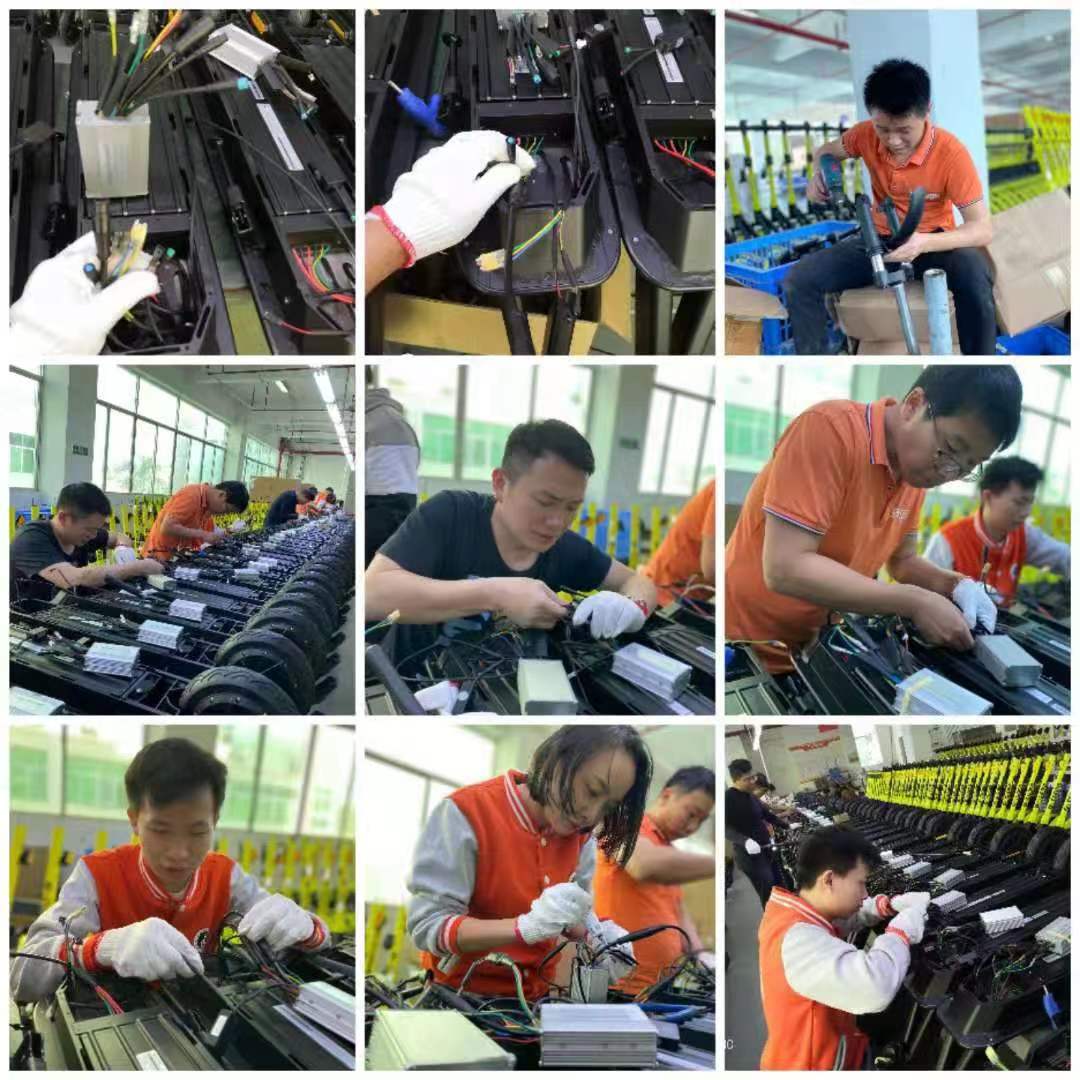
Quality control runs through the same structure: ISO 9001 system compliance, 100% incoming inspection for core parts, in-process patrol inspection, 100% full-function ex-factory inspection of finished products, and support for third-party inspection with official reports. The ODM programme documents third-party certification (UL 2849 / CE), frame fatigue testing, and IPX6 waterproof testing.
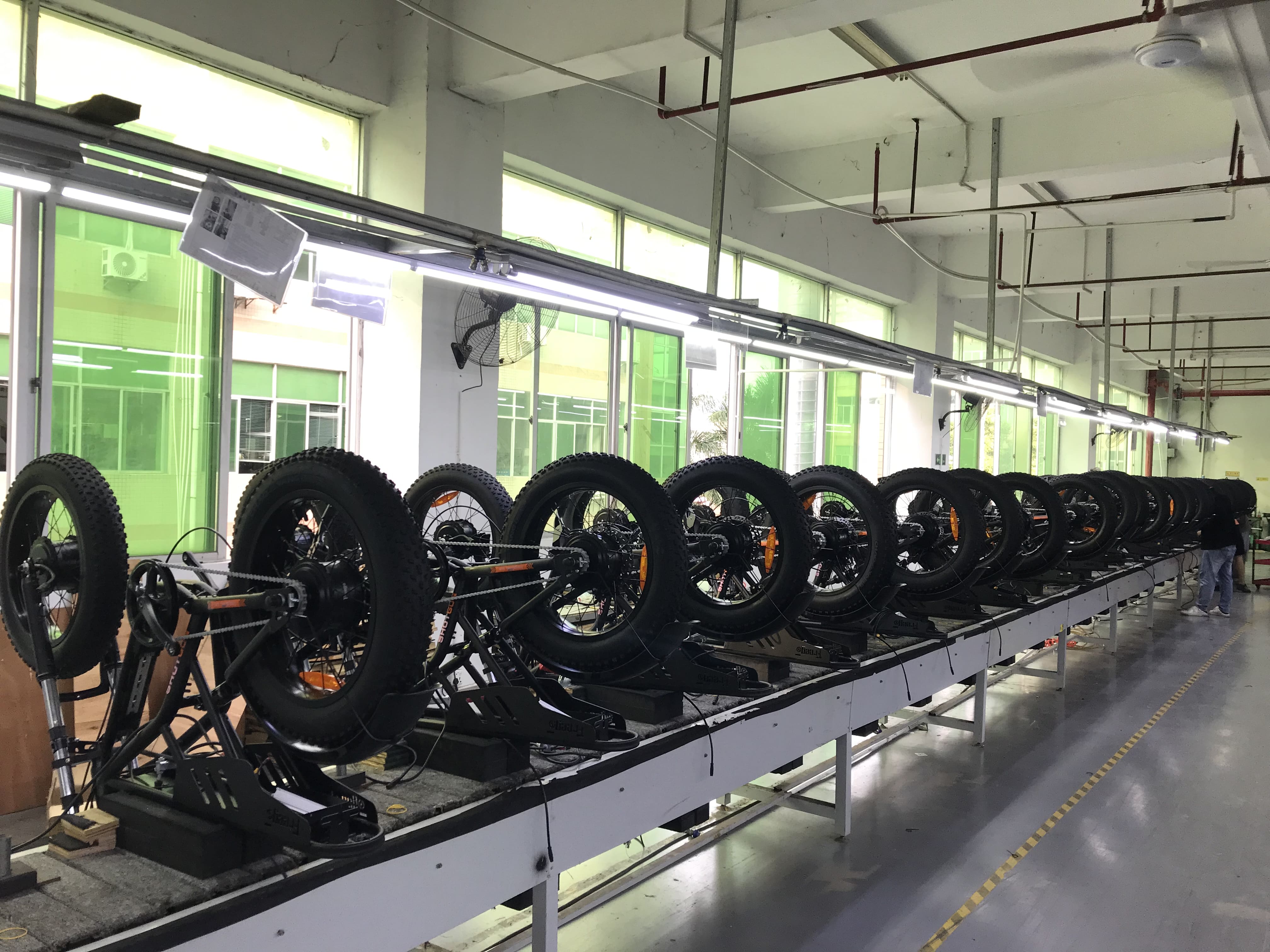
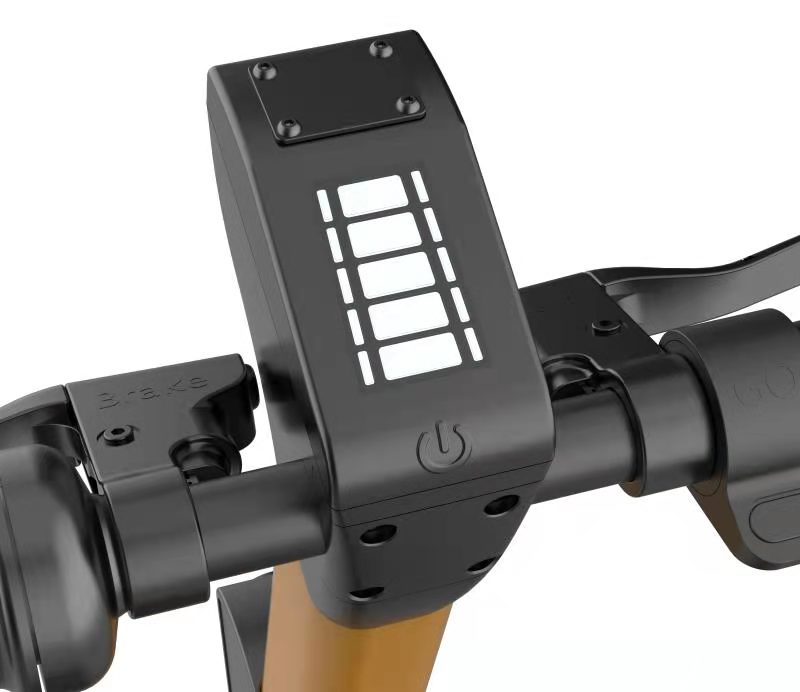
The commercial record behind these programmes is measurable. Freego's dealer programme documents an annual volume of 500+ units per dealer across partnerships running 5+ years, with a 95% dealer retention rate. A separate US retail programme covers more than 120 local e-bike shops purchasing 10–20 units per store monthly, an annual supply volume above 12,000 units, and 3–5 year partnerships. On the powersports side, US retailers stocking high-performance Nova and X-man series models for off-road racing, mountain trail exploration and hunting report pulling gas-to-electric transition customers and expanding into higher-ticket adventure buyers over 2–3 year relationships.
Certification: What Applies to All Three Tiers
Compliance is tier-independent, which simplifies fleet procurement considerably. The Nova 3, Nova 4, Nova 5, Nova 5 MINI and Nova 5 pro are all listed as applicable products under:
- SGS certificate of compliance SGSNA/24/SZ/00059 (SGS North America Inc.), issued 2024-01-29, scope: electric bikes, standard ANSI/CAN/UL 2849-2022.
- SGS certificate of compliance SGSNA/24/SZ/00058 (SGS North America Inc.), issued 2024-01-29, scope: electric bike electrical systems, standard ANSI/CAN/UL 2849-2022.
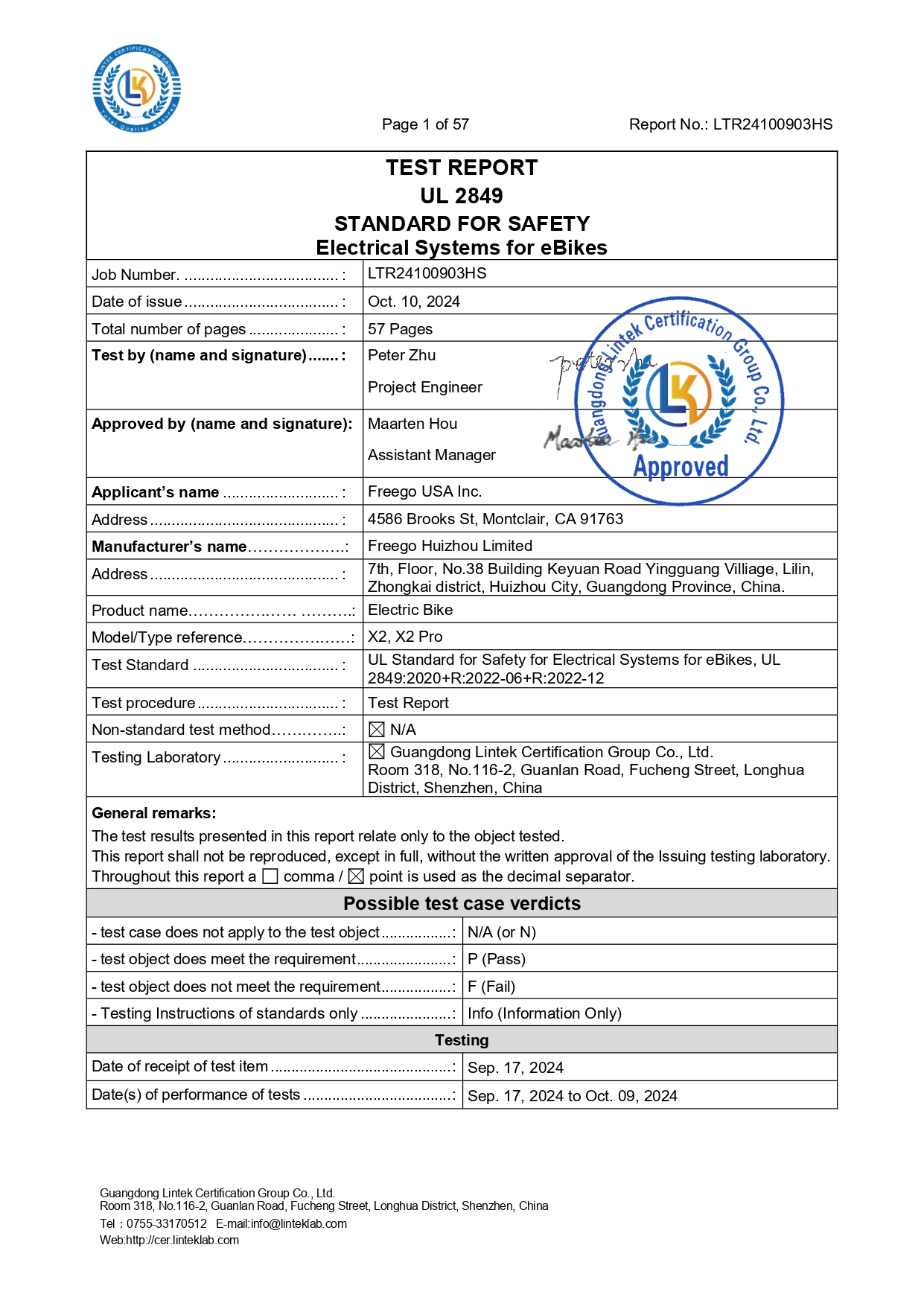
- UL 2849 test report LTR24100903HS (Guangdong Lintek Certification Group Co., Ltd.), issued 2024-10-10, standard UL 2849:2020+R:2022-06+R:2022-12, scope: electrical systems for e-bikes.
- Supplier's Declaration of FCC Conformity HK2210194593E (HUAK, Shenzhen HUAK Testing Technology Co., Ltd.), issued 2022-10-26, standard FCC Part 15 Subpart B, scope: electric bikes.
- Verification of FCC Conformity POCE15101614GF (POCE, Shenzhen POCE Technology Co., Ltd.), issued 2015-10-16, standard FCC Part 15 Subpart B, covering electric mobility devices including the Nova platform.
Certification covers the electrical system and product conformity. It does not automatically authorise road use: the applicable class or vehicle category still depends on configuration and jurisdiction, which is why step 5 of the assignment process belongs in every fleet plan.
FAQ: Fleet Buyer Questions on Mid-Drive Dirt Ebike Tiers
Are the Nova mid-drive tiers certified for the US market?
Yes. The Nova 3, Nova 4, Nova 5, Nova 5 MINI and Nova 5 pro are listed as applicable products on SGS certificate of compliance SGSNA/24/SZ/00059 under ANSI/CAN/UL 2849-2022 (issued 2024-01-29) and on UL 2849 test report LTR24100903HS under UL 2849:2020+R:2022-06+R:2022-12 (issued 2024-10-10). Electrical bike conformity is also documented through Supplier's Declaration of FCC Conformity HK2210194593E under FCC Part 15 Subpart B. Note that certification of the product is separate from road-use classification: under the US three-class system, Class 1 and Class 2 cap at 20 mph and Class 3 at 28 mph, and vehicles exceeding those limits are generally regulated as off-road motor vehicles.
Can the three tiers be customised for a rental or dealer fleet programme?
Yes, through three documented programmes. OEM covers logo printing, frame colour customisation, motor power labelling and battery capacity selection at a 50-unit-per-model minimum. ODM adds vehicle structure industrial design, core functional module development, riding mode and intelligent system customisation, and scenario-based configuration at a 100-unit-per-model minimum. The IoT Solution Provider programme supplies integrated 4G/GPS modules, a sharing management SaaS dashboard, a branded user app and geofencing firmware, with 5,000 modules/month standard capacity and a 100-unit minimum on standard modules. Dealer POS materials, customised accessory bundles and co-branding marketing assets are also available.
What drives the cost difference between the entry, mid and premium tiers?
The cost ladder tracks the hardware that changes between tiers rather than a marketing position. Peak motor output moves from 3,000W to 6,000W to 15,000W; battery architecture moves from 60V 25Ah to 60V 30Ah to 72V 40Ah, all on 21700 lithium-ion cells; brake hardware moves from a 2-piston caliper with a 220 mm rotor to 4-piston systems, including a 203 mm rotor on the premium tier; suspension moves from hydraulic front and rear shocks to an inverted fork plus OEM shock, then to premium KKE hydraulic units; and the frame moves from high-strength carbon steel to high-strength forged aluminum alloy. The premium tier also carries a 150A/400A controller and a 150 KG published max loading, against 120 KG on the entry and mid tiers. For budgeting, the practical levers are order structure rather than tier alone: OEM production starts at 50 units per model, standard wholesale orders ship at 12 units (one full pallet) from the US local warehouse, and a single unit can be ordered for sample display.
What does the sample and acceptance process look like?
Sample display orders start at 1 unit, while standard wholesale bulk orders start at 12 units (one full pallet). Delivery terms are door-to-door from the US local warehouse, EXW Huizhou manufacturing factory, or FOB Shenzhen. Acceptance is based on local service centre inspection and compliance verification, and wholesale payment terms are upfront with restocking support. For fleet programmes, the recommended sequence is a single-unit sample for rider and route validation, followed by a pallet-level pilot on the highest-demand zone before a full volume commitment.
What lead times should a fleet build into its season plan?
Lead time depends on the programme. OEM custom production from the China factory runs 45–60 days, while spot customisation such as logo or packaging from the US local warehouse runs 3–8 business days; OEM regular monthly capacity is 2,000 units, rising to 3,000+ units in peak season. ODM requires 15–20 days for design and prototyping and 50–70 days for mass production after design confirmation, with monthly capacity of 1,500 units regular and up to 2,500+ units at peak. Custom IoT solution development runs 30–45 days. US distribution spot delivery is 3–8 business days at a 12-unit minimum. Plan at least one full season lead window ahead of peak demand — and to start that plan, you can review the full Freego product and capability brochure here or send your route and rider profile to the fleet team for a tier recommendation.
Conclusion: Buy the Duty Rating, Not the Tier Label
The three Freego mid-drive tiers answer three different operating questions. Nova 3 answers "how do I run a high-volume, mixed-ability rental or supervised programme without over-buying hardware?" Nova 4 answers "how do I hold performance on repeated guided descents with intermediate riders?" Nova 5 pro answers "how do I deliver a professional-grade experience where output, range and load capacity are the product?" Read as a ladder, they give a fleet manager a defensible reason for every unit on the floor — and a serviceable two-tier mix instead of an arbitrary three-tier one.
Start with the route audit, classify the riders, confirm the compliance classification per market, and validate the tier with a physical sample before committing to volume.
Request a Fleet Tier Recommendation or a Sample Unit
Send your route gradient, rider profile and target duty cycle and the Freego fleet team will map it to the Nova 3, Nova 4 or Nova 5 pro configuration — including OEM and IoT options where the programme requires them.
Email: Ahmed@freegobikes.com · Tel: +1 818 275 1590 · WhatsApp: +1 310 678 1530
Address: 3681 Walnut Ave, Chino, CA 91710 · freegobikes.com
Download the full product and capability brochure: Freego Brochure (PDF)
Have Questions or Need More Details?
Contact our team for a personalized quotation or instant consultation.
Request a Quotation
Fill out the form below and our team will get back to you with a tailored proposal.
WhatsApp Direct Chat
Prefer to chat in real-time? Message us on WhatsApp for instant assistance & quick answers.
- Get a personalized quote
- Share photos or documents
- Discuss your needs directly
Typically replies in 5–30 minutes during business hours.