Dirt Ebike vs. Electric Mountain Bike: Off-Grid Commuter Guide
Direct answer: a dirt ebike is an off-road platform derived from the electric motorcycle - motorcycle-grade tires, long-travel hydraulic suspension, a high-output hub or mid-drive motor and multi-piston hydraulic brakes. An electric mountain bike is derived from the bicycle - narrower tires, a lighter frame, shorter suspension travel and a pedal-assist drivetrain held inside e-bike class limits. An off-grid commuter should choose the dirt ebike when the daily route is mostly unpaved, loose or steep, and the electric mountain bike when the route is mostly paved or hardpack and pedaling efficiency matters. Suspension travel, tire width and motor architecture are what turn that general rule into a specific buying decision.
Why Off-Grid Commuters End Up Comparing These Two Bikes
Off-grid commuting is rarely one surface. A realistic route starts on a dirt or gravel access road, crosses loose sand, mud or embedded rock, and then joins pavement for the last miles into town, a jobsite or a trailhead. That mixed profile is exactly where a dirt ebike and an electric mountain bike stop being interchangeable, even though both are sold as all-terrain machines.
The comparison is also a budget comparison, because most buyers are choosing one platform to cover the whole route rather than buying two bikes. Three failure modes show up repeatedly in that decision:
- Under-tired for the loose half. A narrow mountain-bike tire is efficient on hardpack but sinks and deflects in sand, mud and deep gravel, which is often where an off-grid route actually starts.
- Over-built for the paved half. A motorcycle-derived dirt ebike carries mass, rolling resistance and consumable cost that a commuter never recovers if only 10-20% of the route is unpaved.
- Unchecked classification risk. High-output off-road platforms are not automatically street-legal, and the legal class of the bike can change the entire cost of ownership once registration, insurance or land-access rules apply.
Industry Background: Two Design Traditions, One Converging Market
The two platforms come from different engineering lineages, and that lineage still shapes the parts catalogue on each bike. Dirt ebikes descend from off-road motorcycles, which is why the Freego X series uses motorcycle-grade tires, KKE brand hydraulic front and rear shock absorbers and four-piston hydraulic disc brakes. Electric mountain bikes descend from mountain bicycles, which is why their frames, wheel sizes and drivetrains are built around pedaling first and motor assistance second.
Commercially, the category is expanding. A Dataintelo commercial research report estimates the global electric dirt bike market at approximately USD 1.47 billion in 2025, with a projection of USD 5.0 billion by 2035. That figure is a commercial forecast rather than an audited statistic, so it is useful as a directional signal of category growth, not as a procurement guarantee.
Architecture has also split inside brand portfolios. Freego product materials describe the Nova series as a mid-drive family and the X series as a hub-motor family, and a single model can be reported with both a nominal and a peak power figure. That distinction matters: a 6000W peak hub motor and a nominal rating of the same motor are not the same number and should never be merged into one comparison ranking.
Regulation is the second background factor. In the United States, a CPSC standards summary describes an electric bicycle definition that involves operational pedals and a maximum speed of less than 20 mph when operated solely by electric power; the document scope still requires document-level verification before it is applied to a specific model. California adds a separate layer: as of 2026, electric motorcycles above 750W without pedals are treated as Off-Highway Vehicles requiring registration and decals. A manufacturer's software speed preset does not by itself establish street legality in any jurisdiction.
The Three Specifications That Actually Decide the Choice
1. Suspension: travel, tune and load
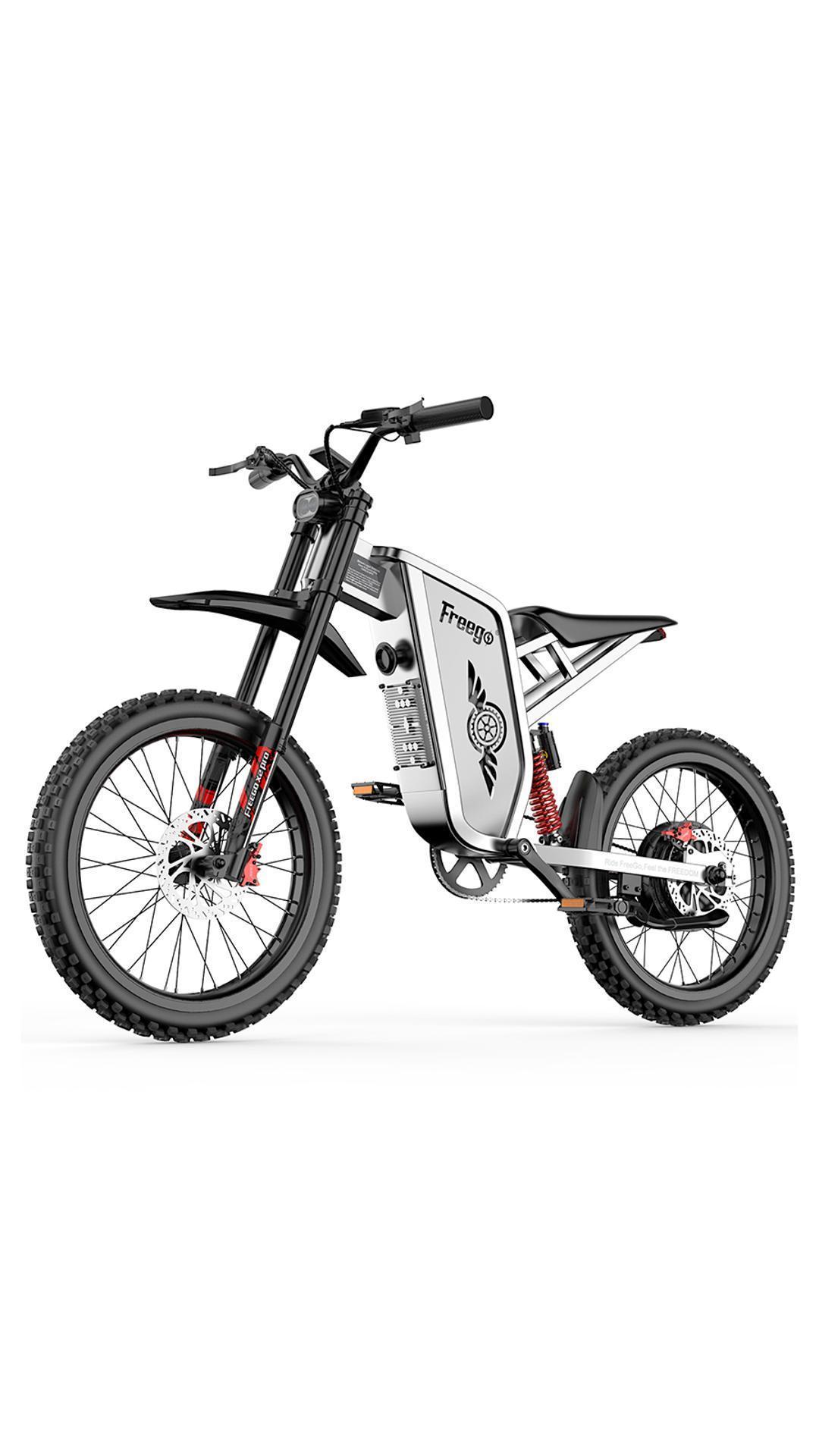
Suspension is the clearest physical difference between the platforms. The Freego X2 Pro runs KKE brand hydraulic front and rear shock absorbers, a motorcycle-derived configuration built to absorb repeated high-speed impacts from rock, roots and drop-offs while carrying a loaded rider. A typical electric mountain bike uses a shorter-travel suspension fork, plus frame-based rear suspension on full-suspension models, tuned around a much lighter vehicle and a rider who is also pedaling.
For an off-grid commuter the practical question is not which suspension is better, but which one is loaded the way you will load it. A bike that carries rider plus tools plus water plus camping gear needs suspension that can be set up for that mass without bottoming out. The X2 Pro is rated to a maximum loading of 120KG (264LBS), which is the number to check against your real payload rather than a bare rider weight.
2. Tire width and construction
Tire specification is where most of the day-to-day behaviour lives. The Freego X2 Pro uses 70/100-19 puncture-resistant motorcycle-grade tires - a wide, heavy-carcass tire designed for traction and puncture resistance on loose surfaces. Electric mountain bike tires are substantially narrower and lighter, built to roll efficiently and to be pedaled.
The trade-off runs in both directions. Wider motorcycle-grade tires float over sand and gravel better and resist punctures from sharp rock, but they add rolling resistance and steering weight on pavement, and they wear as a consumable cost. Narrower mountain-bike tires are faster and lighter on hardpack and pavement, but they lose floatation and comfort once the surface turns soft.
3. Motor characteristics: hub, mid-drive and pedal-assist
Motor architecture changes how the bike delivers force, not just how much force it delivers. The X2 Pro uses a 6000W peak brushless hub motor paired with a 60V 30Ah battery built from Panasonic or LG 21700 lithium-ion cells. A hub motor drives the wheel directly through a simple drivetrain, which suits a machine whose primary job is torque delivery on loose ground. A mid-drive motor, as used across the Freego Nova series, sends power through the drivetrain so the gearing multiplies climbing force - a different answer to the same steep-slope problem, with drivetrain wear as the trade-off.
Electric mountain bikes sit in a third position: a pedal-assist system with a torque sensor, sized and speed-limited to match the e-bike class the model is sold under. That architecture is efficient and natural to pedal, and it is also the reason an eMTB feels underpowered if you expect motorcycle-style throttle response on a steep, loose climb.
4. Brakes, battery and duty cycle
Braking authority scales with mass and terrain. The X2 Pro carries a 4-piston hydraulic disc brake with a 203mm rotor, and the manufacturer states a charging time of 5 to 8 hours. Stated range is 56 miles in city mode and 20 miles in off-road mode - a spread that shows how much terrain, not just battery capacity, drives consumption. Treat those figures as manufacturer-stated values and validate them against your own route profile.
Two Freego Reference Platforms at a Glance
The comparison becomes concrete when you place a dirt ebike and a mixed-terrain commuter side by side. The X2 Pro represents the off-road end; the Cityflow B1 represents the paved and mixed-commute end, with app connectivity, GPS positioning and anti-theft functions that an off-grid rider may also value for security at a trailhead.
| Specification | Freego X2 Pro (dirt ebike) | Freego Cityflow B1 (urban commuter) |
|---|---|---|
| Intended environment | Off-road trails, sand, mud, inclines above 25 degrees, mixed urban use | Mixed traffic, wet and rainy streets, night riding, paved roads and bike lanes |
| Motor | 6000W peak brushless hub motor | 1000W brushless motor |
| Battery | 60V 30Ah lithium-ion 21700 cells (Panasonic / LG) | 48V 25Ah removable lithium-ion cells |
| Top speed | 28MPH urban mode / 50MPH off-road mode | 25MPH |
| Stated range | 56MI city / 20MI off-road | 65MI per charge |
| Suspension | KKE brand hydraulic front and rear shock absorbers | Front and rear dual hydraulic shock absorbers |
| Tires and wheels | 70/100-19 puncture-resistant motorcycle-grade tires | 26 inch alloy wheels with high-performance urban pneumatic tires |
| Brakes | 4-piston hydraulic disc brake, 203mm rotor | Not stated in the current specification set |
| Frame | High-strength carbon steel pipe | Carbon fiber and aluminum alloy |
| Smart features | Not stated in the current specification set | App control, GPS, anti-theft, smart LCD color dashboard |
| Max loading | 120KG (264LBS) | 120KG (264LBS) |
Step-by-Step: Choosing by Primary Riding Environment
The decision sequence below keeps the comparison tied to your route instead of to a spec sheet. It applies whether you are buying one bike for personal off-grid commuting or a small fleet for a site or rental operation.
- Map the surface mix. Write down the percentage of a normal round trip that is paved, hardpack, loose gravel, sand or mud, and identify the steepest sustained incline. A route that is 80% paved with one gravel section points to a commuter platform; a route that is 60% unpaved points to a dirt ebike.
- Define the duty cycle. Daily commuting, weekend trail access and site work have different load profiles. Add rider weight plus gear plus tools to get a real payload, then compare it to the 120KG (264LBS) maximum loading on the X2 Pro and the Cityflow B1.
- Choose the tire class first. Wide motorcycle-grade tires for floatation and puncture resistance, narrower pneumatic tires for rolling efficiency. This single choice eliminates most of the wrong shortlist before you look at motor power.
- Match motor architecture to the terrain. Hub drive for direct torque delivery and a simple drivetrain; mid-drive where you want gearing to multiply climbing force; pedal-assist where the ride is a bicycle ride with assistance. Always separate nominal and peak power figures when comparing models.
- Check classification before you commit. Confirm how the model is classified in the destination market, whether pedals are required, and what registration, decals or insurance apply. Off-highway classification is a real operating cost, not a paperwork detail.
- Validate with a sample and documentation. Ask for the specification sheet, brake and suspension component identification, battery cell information and third-party inspection reports, then test the bike on the surface that matches your route.
Use Cases: Matching Platform to Project
Trailhead access plus a paved last mile. The classic off-grid commuter profile. A dirt ebike covers the loose approach road with confidence, then uses its urban speed mode for the paved section. The trade-off is weight and tire wear on pavement, and the rider should confirm that the urban mode satisfies local rules.
Desert and camping trips. Sand and loose rock reward wide tires, long-travel hydraulic suspension and high torque. This is where a motorcycle-derived platform is clearly in its design envelope, and where a narrow-tired eMTB becomes a pushing exercise.
Predominantly urban mixed commuting. If the unpaved portion is a short gravel cut-through, the arithmetic changes. A commuter platform such as the Cityflow B1 delivers 65 miles of stated range, app control, GPS and anti-theft at a much lower mass, and its urban tires and dual hydraulic suspension are matched to wet streets and night riding rather than to rock gardens.
Site, resort and rental duty. Mixed fleets usually need both platforms rather than one compromise: commuter bikes for guests staying on paved property, dirt ebikes for guided off-road routes. Swappable battery operation and IoT-controlled unlocking are the usual operational requirements for that kind of shared fleet.
Dirt Ebike vs. Electric Mountain Bike: Side-by-Side
The table below compares the two design philosophies rather than two specific models. The electric mountain bike column describes the class as a category, because power, travel and speed limits vary by model and by market classification.
| Dimension | Dirt ebike | Electric mountain bike |
|---|---|---|
| Design origin | Off-road motorcycle | Mountain bicycle |
| Tires | Wide motorcycle-grade tires, puncture resistant, high floatation | Narrow knobby tires, lighter, lower rolling resistance |
| Suspension | Long-travel hydraulic front and rear shock absorbers, load-rated for gear | Shorter-travel fork, optional rear suspension, tuned for a lighter vehicle |
| Motor | High-output hub or mid-drive motor, peak ratings stated by the manufacturer | Pedal-assist drive with torque sensing, class-limited output and speed |
| Pedaling role | Secondary to motor drive | Central to the ride |
| Best surface mix | Majority unpaved, loose, sandy or steep | Majority paved, hardpack or rolling trail |
| Paved-road efficiency | Lower, due to mass and tire drag | Higher, due to lower mass and narrow tires |
| Consumables to budget for | Motorcycle-grade tires, brake pads and rotors, suspension service | Bicycle tires, chains and cassettes, brake pads |
| Classification risk | Higher: may fall outside e-bike definitions and into off-highway or motorcycle rules | Lower: usually designed to fit an e-bike class, still market-specific |
FAQ: Off-Grid Commuting With a Dirt Ebike
Is a dirt ebike street legal, and can I commute on public roads with it?
It depends on the market and on how the specific model is classified. In the United States, a CPSC standards summary describes an electric bicycle definition involving operational pedals and a maximum speed of less than 20 mph when operated solely by electric power, and the exact scope of that definition still requires document-level verification for a given model. California applies a further rule: as of 2026, electric motorcycles above 750W without pedals are treated as Off-Highway Vehicles requiring registration and decals. Manufacturer software settings, including street-oriented speed presets, are product features and do not by themselves establish legality. Confirm classification, registration and land-access rules for each market before you plan a public-road commute.
Can a dirt ebike handle a route that mixes trail and pavement every day?
Yes, with a clear understanding of where it is strong. The Freego X2 Pro is specified with a 6000W peak hub motor, a 60V 30Ah battery, KKE hydraulic front and rear suspension, a 4-piston hydraulic disc brake with a 203mm rotor and 70/100-19 motorcycle-grade tires, with a stated 56 miles of city range and 20 miles of off-road range. That combination is built for loose, steep and rough ground. The limits are on the paved side: motorcycle-grade tires and the mass of an off-road frame reduce pedaling efficiency, and the 20-mile off-road range figure should be treated as the planning number for the unpaved portion of the trip.
Which platform costs more to own, and what drives the difference?
Ownership cost is driven by duty cycle rather than by purchase price alone, so it is worth modelling four lines: energy and charging time, tire and brake consumables (motorcycle-grade tires and 4-piston brake components carry different replacement economics than bicycle components), suspension service, and compliance cost such as registration, decals or insurance where off-highway classification applies. A dirt ebike used mostly on pavement pays consumable and efficiency penalties it never recovers; an electric mountain bike used on deep sand pays in traction and motor load. Request a current quotation and specification sheet for the exact model and market so those four lines can be calculated on real numbers.
Can I validate a dirt ebike with a sample before ordering volume?
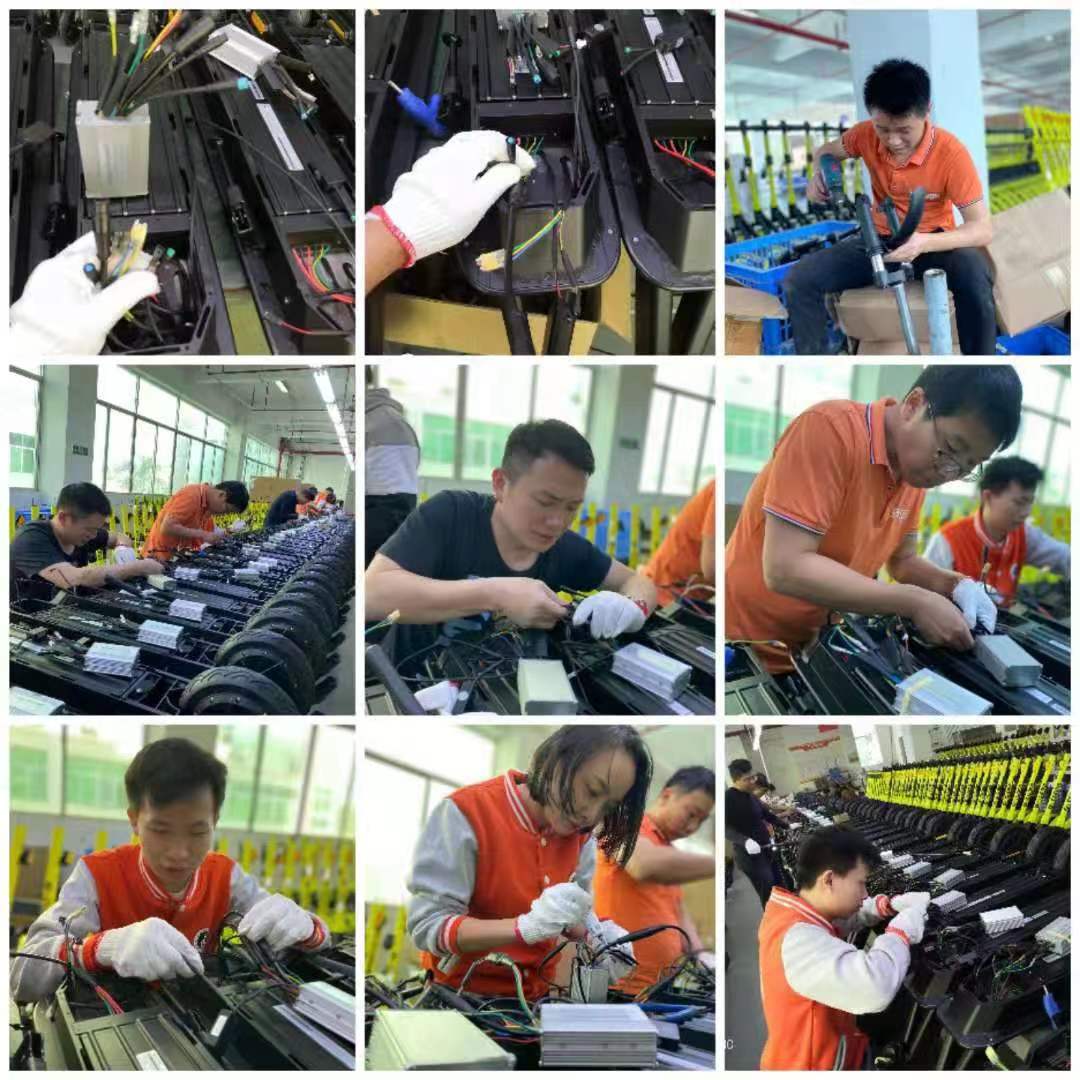
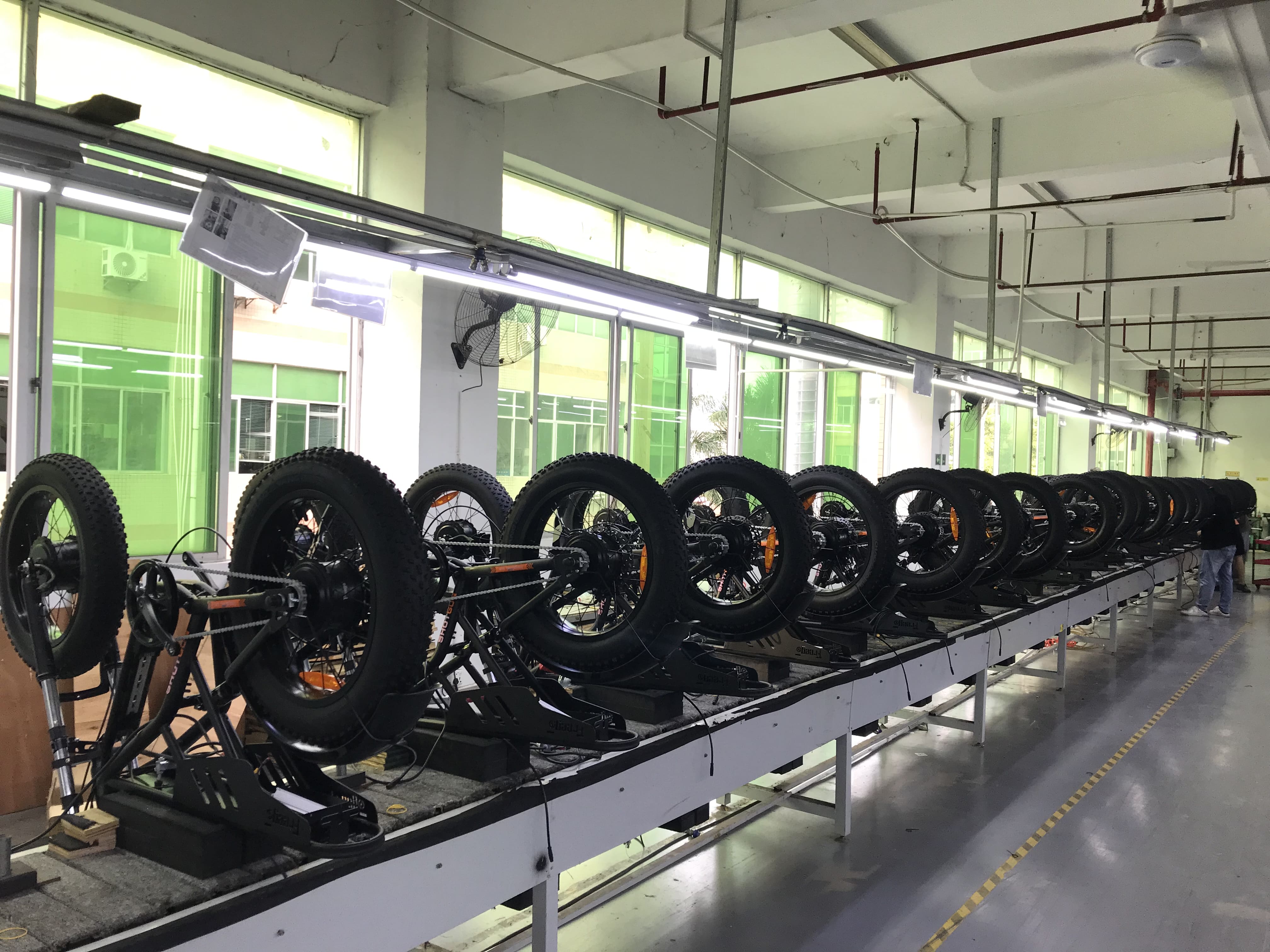
Yes. Freego supports OEM customization with a minimum order quantity of 50 units per model, and ODM projects with a minimum of 100 units per model, including structure design, power and electronic control module development, and scenario-based customization. Quality documentation available for validation includes ISO 9001 system compliance, 100% incoming inspection of core parts, in-process patrol inspection, full-function ex-factory inspection, and support for third-party inspection such as UL, CE or SGS with an official report, alongside frame fatigue testing and IPX6 waterproof testing. Spot customization from the US local warehouse can ship in 3 to 8 business days at a minimum of 12 units or one pallet.
What is the production and delivery lead time for a dirt ebike order?
Lead time depends on the route chosen. OEM custom production from the China factory runs 45 to 60 days, with regular monthly capacity of 2000 units and up to 3000 or more units in peak season. ODM programs allow 15 to 20 days for product design and prototyping and 50 to 70 days for mass production after the custom design is confirmed, at 1500 units per month regular capacity and 2500 or more units at peak. Spot orders and logo or packaging customization from the US local warehouse ship in 3 to 8 business days. For a route-specific recommendation between the X2 Pro and a commuter platform, send your surface mix and payload to the Freego team at Ahmed@freegobikes.com or WhatsApp +1 310 678 1530, or download the product catalogue below.
Conclusion: Choose the Envelope, Then the Model
A dirt ebike and an electric mountain bike are not competing answers to the same question. They are two envelopes: one built around traction, suspension travel and torque on loose ground, the other built around pedaling efficiency and class-compliant assistance. For an off-grid commuter, the surface mix of the daily route settles the choice faster than any power figure - and once the envelope is clear, the model choice becomes a matter of payload, range, braking and classification in your market.
If your route is majority unpaved, the Freego X2 Pro sits at the off-road end of that spectrum with 70/100-19 motorcycle-grade tires, KKE hydraulic suspension, a 4-piston hydraulic brake and a 6000W peak hub motor. If your route is majority paved with occasional gravel, the Cityflow B1 answers the same commute with 65 miles of stated range, front and rear dual hydraulic suspension and app-based security. Both are built by Freego USA Inc. in Chino, California, a company founded in 2012 that exports to more than 40 countries and regions.

Next Step: Match the Bike to Your Route
Send the Freego team your surface mix, payload and market, and you will get a platform recommendation with the matching specification sheet rather than a generic catalogue page.
Catalogue download: Freego product catalogue (PDF)
Website: freegobikes.com
Email: Ahmed@freegobikes.com | WhatsApp: +1 310 678 1530
Tel: +1 818 275 1590
Address: 3681 Walnut Ave, Chino, CA 91710, United States

Have Questions or Need More Details?
Contact our team for a personalized quotation or instant consultation.
Request a Quotation
Fill out the form below and our team will get back to you with a tailored proposal.
WhatsApp Direct Chat
Prefer to chat in real-time? Message us on WhatsApp for instant assistance & quick answers.
- Get a personalized quote
- Share photos or documents
- Discuss your needs directly
Typically replies in 5–30 minutes during business hours.