Dirt Ebike FAQ: Long-Term Partnership & Lifetime Support
A long-term dirt ebike partnership is decided less by a spec sheet than by four operational questions: what the purchase order commits both sides to, how a shipment is accepted, how a fault is resolved once the bike is with a rider, and whether the right part exists when a fleet is two years old. This FAQ answers the questions dealers and distributors raise most often when they evaluate Freego for that kind of relationship, using the company's published operating facts and separating them from the points a buyer has to confirm in writing.
One term needs scoping first. In a dealer context, lifetime support means support across the service life of a model — parts identification, technical answers and claim handling — not an unlimited warranty. Warranty duration and coverage are fixed in the signed order documents. The sections below keep those two ideas apart, because a partnership built on a misread warranty is a partnership that ends in a dispute.
What Does a Long-Term Dirt Ebike Partnership Actually Cover?
A long-term supply relationship stands on four parts, and a supplier can look strong on the first while quietly failing the other three:
- Commercial terms — which models and configurations, at what quantities, on what schedule, under which Incoterms.
- Acceptance — the written definition of a conforming shipment, and what happens when one is not conforming.
- After-sales — who owns a fault, through which channel, with what evidence, and against what clock.
- Parts continuity — whether a model stays serviceable after the launch cycle moves on.
Off-road use weights the last two more heavily than commuting use does. A dirt ebike concentrates wear on a small set of expensive parts — brakes, suspension, tires, battery packs and controllers — and a rider who cannot get a caliper rebuild kit does not blame the caliper. That is why the after-sales and parts answers belong in the first meeting rather than the third.
Who Is Behind the Partnership? Freego's Operating Base
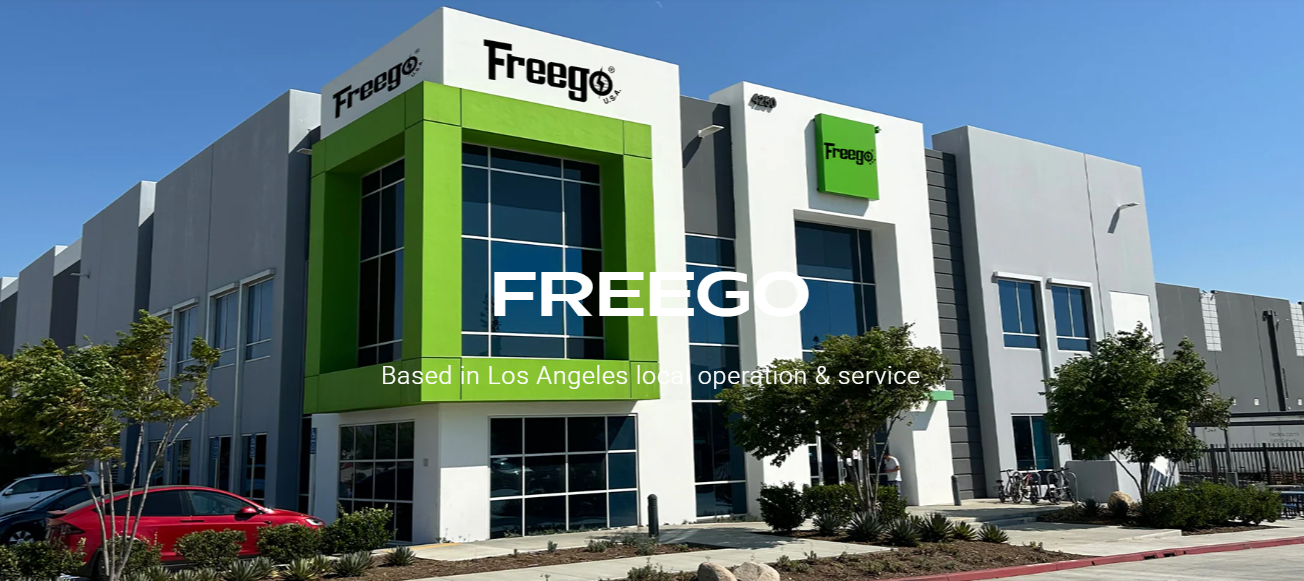
Freego (Freego USA Inc.) is a Chino, California–headquartered designer and manufacturer of high-performance electric mobility products, founded in 2012. Its published operating profile is the natural starting point for any capacity, continuity or scheduling question a distributor wants to put to it.
- Manufacturing facility: 3,000m².
- Headcount: 50 or more people, rising to 100 or more during peak season.
- Engineering: an R&D team of 10+ engineers.
- Output: annual sales of approximately 20,000 vehicles, with cumulative global sales above 1 million vehicles.
- Export share: approximately 90% of total sales.
- Markets: more than 40 countries and regions, including North America (United States), Europe (Germany, Italy, France), South America and Southeast Asia.
The portfolio covers electric kick scooters, electric off-road motorcycles (X-man and Nova series), fat-tire electric bicycles (Shotgun series), city commuter bicycles (Cityflow series) and three-wheeled electric recreational vehicles (FlexTrike series). A dirt ebike dealer only needs the off-road lines directly, but a narrower question is worth asking: which components are shared across those categories, and does that sharing help or hinder parts supply for the models you stock.
One arithmetic check sets expectations. On a simple area basis, approximately 20,000 vehicles a year from a 3,000m² facility works out to roughly 6.7 vehicles per square metre per year — a calculated ratio, not a measure of line capacity. It says nothing about line count, automation or takt time, none of which are published, but it does describe an operation in which scheduling discipline, rather than floor space, is the variable a dealer should manage.
Order Terms — What to Fix Before the First Purchase Order
Order terms are the cheapest thing to negotiate and the most expensive thing to leave vague. Eight items belong in the agreement before the first container is booked.
- Model and configuration identity. Exact model name, motor variant, battery configuration, brake specification and suspension specification. A family name alone is not a configuration.
- Power metric. State whether the rating is peak or continuous, and at what test condition.
- Quantity per model and per colourway, with a stated tolerance for over- or under-shipment.
- Price basis, currency and validity period, including what triggers a re-quote.
- Incoterms, port of loading and port of discharge.
- Payment schedule, tied to named milestones rather than to a calendar.
- Production slot and shipping window for each purchase order — not a single annual estimate.
- Documentation and packaging standard: what travels with each unit, and how it is packed for the voyage.
Why the power metric needs its own line
Freego's model specifications are written in peak terms: Nova 5 pro at 15000W peak, Nova 3 at 3000W peak, X2 Pro at 6000W peak and X3 at 8000W. Peak power describes a short-burst capability. It does not describe continuous duty, thermal behaviour or the sustained climb a rental fleet will actually impose on a motor. An order that states 8000W without a convention leaves the acceptance test undefined, and a dealer who repeats the number without the qualifier inherits the same ambiguity in front of their own customers. Write the convention into the clause and keep peak and continuous figures separate in your own dealer literature.
Acceptance Criteria — How to Agree on What Conforming Means
Acceptance criteria answer one question: at the moment of receipt, is this shipment what was ordered? Dealers who skip the clause find out during their first dispute. Six elements make it workable.
- Fix a reference sample. Approve a physical sample of each model and configuration before mass production, and make the approved sample — not the catalogue render — the reference standard.
- Define the inspection scope. State whether every unit is unpacked and checked or a defined sample is, and whether inspection happens at the factory before packing, at the dealer on arrival, or both.
- Classify defects. Separate cosmetic, functional and safety-critical findings. A paint blemish and a brake that will not hold pressure cannot share a remedy.
- List the documentation pack. Serial numbers per unit, battery documentation, and the inspection records you intend to rely on when a claim is raised.
- Write the remedy path. For each defect class, name the remedy — replacement, repair, credit or rework — and the evidence required to trigger it.
- Set the clock. Define how many days after arrival a claim may be raised, and how units already assembled or sold to end customers are treated.
None of this is exotic. What makes it work is that every element is agreed before the first shipment instead of during the first problem, and that the factory, the freight forwarder and the dealer all work from the same definitions.
Warranty and After-Sales — The Questions That Decide the Deal
What a warranty schedule should state
- Which components are covered, and for how long, listed by model.
- What is excluded — brake pads, tires, tubes and other consumables are the usual boundary, but the boundary should be written rather than assumed.
- Whether coverage is parts-only or parts and labour.
- Whether labour performed by the distributor is reimbursed, and how it is evidenced.
- What a claim must contain: unit serial, photographs, a diagnostic description.
- Who pays transport for failed parts, and in which direction.
- How the distributor's own retail customer is handled.
Because duration and coverage vary by model, component and destination market, the warranty schedule is confirmed in the order documents rather than inferred from a product page. Ask for the schedule that names the exact models you intend to stock.
How a claim routes
Freego publishes a direct contact route rather than a ticket portal: Ahmed, Ahmed@freegobikes.com, +1 818 275 1590, WhatsApp +1 310 678 1530, and a US address at 3681 Walnut Ave, Chino, CA 91710. For a North American distributor, a single named contact with a California address shortens the loop between a rider complaint and a decision. For a distributor outside North America the same channel works, but the physical return leg is longer — one more reason to agree in advance which failures are settled with a replacement part and which require the whole unit to travel back.
What lifetime support does and does not mean
Treat it as a commitment to keep a model answerable and serviceable across its service life: parts identification, technical questions, claim handling. It does not replace a warranty schedule, and it does not promise that every component stays in production indefinitely. The practical test is a question asked model by model — which parts are expected to remain available, for how long after a model is superseded, and at what point a substitution is offered instead. Get that answer in writing for the models you stock, while the question is still theoretical.
Spare Parts Availability — Planning for Year Two, Not Week One
Parts planning starts with the architecture split. Freego's product materials describe the Nova series as mid-drive and the X series as hub-motor, and the specifications follow that pattern: Nova 3 and Nova 5 pro are mid-drive machines, X2 Pro and X3 are hub-motor machines. A dealer stocking both families is running two parts streams, not one.
| Model | Motor architecture | Peak motor power | Battery | Parts-planning note |
|---|---|---|---|---|
| Nova 3 | Mid-drive | 3000W | 60V, 25Ah (21700 cells) | 2-piston hydraulic disc brake, 220mm rotor |
| Nova 5 pro | Mid-drive | 15000W | 72V, 40Ah (21700 cells) | 4-piston hydraulic disc brake, 203mm rotor; KKE front and rear suspension |
| X2 Pro | Hub motor | 6000W | 60V, 30Ah (Panasonic/LG 21700 cells) | 4-piston hydraulic disc brake, 203mm rotor |
| X3 | Hub motor | 8000W | 72V, 40Ah or 50Ah (21700 cells) | 70/100-19 motorcycle-grade tires; confirm which battery configuration is ordered |
Four models, four battery configurations: 60V 25Ah on Nova 3, 72V 40Ah on Nova 5 pro, 60V 30Ah on X2 Pro, and 72V 40Ah or 50Ah on X3. Different voltage and capacity mean different packs, different chargers and different controller settings, so nothing should be treated as interchangeable until the supplier confirms it in writing for that specific pair of models. The same caution applies to brake hardware — Nova 3 carries a 2-piston hydraulic caliper on a 220mm rotor, while Nova 5 pro and X2 Pro carry 4-piston calipers on 203mm rotors — and to tires, where X3 specifies 70/100-19 motorcycle-grade rubber.
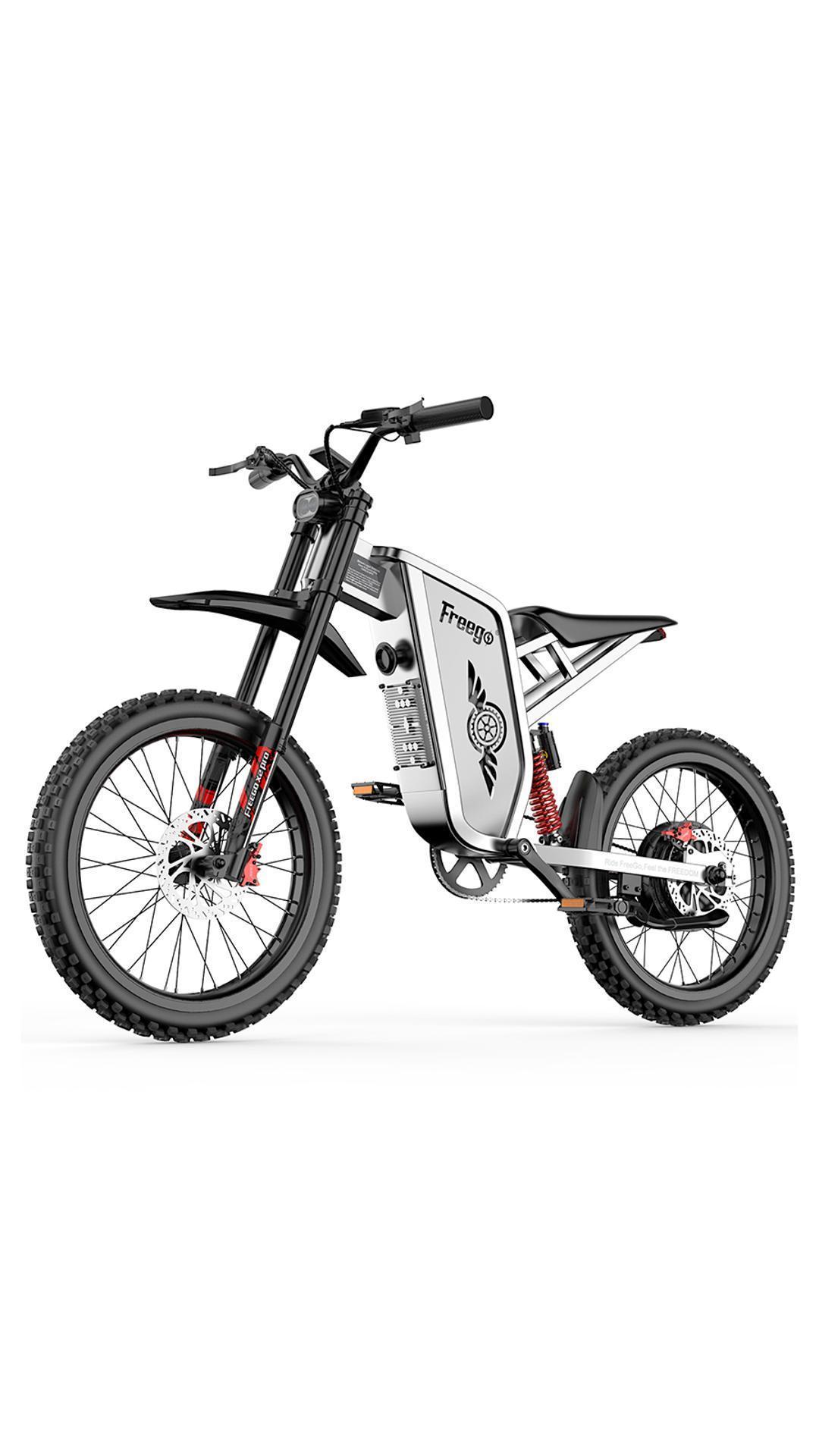
A working stocking list for a dirt ebike line usually covers brake pads and rotors, tires and tubes, chains and sprockets for chain-driven mid-drive models, battery packs, chargers, controllers, displays, throttle and brake levers, suspension seals and the fasteners that disappear in a workshop. Three requests turn that list into a plan:
- A model-level parts list with part numbers.
- An explicit statement of which parts are shared across models and which are not.
- The ordering route, and how small parts orders are consolidated.
Ask for that list before the first order rather than after the first failure. A supplier who can produce it quickly is giving you a useful signal about how the service side of the business is organised.
Capacity, Seasonality and Engineering Bandwidth — How Freego Scales
Freego's published headcount is 50 or more people, rising to 100 or more during peak season, alongside an R&D team of 10+ engineers. That pairing tells a dealer something specific about how to plan.
The flex happens on the production side. Seasonal doubling is a manufacturing response. The engineering team is a small, fixed pool serving the whole portfolio — scooters, off-road motorcycles, fat-tire bikes, commuter bikes and trikes — so a private-label variant, a specification change or a technical fix competes for the same attention as everyone else's request. Engineering-dependent requests need a longer runway than a repeat order of an existing configuration.
Scheduling is the lever, not persuasion. Peak-season capacity is absorbed by whichever orders are already in the plan. A dealer whose selling season overlaps the supplier's peak should confirm a production slot and a shipping window per purchase order rather than per year, and should treat the slot as part of the commercial terms rather than as a courtesy.
Cumulative volume is a parts question, not a comfort blanket. More than one million vehicles sold cumulatively across the portfolio is a meaningful scale signal, but it does not by itself tell you how long a specific model's parts will be supported. Ask per model, and put the answer alongside the warranty schedule.
Where a Freego Partnership Fits — Three Dealer Profiles
Rental and ride-sharing fleets
Rental operations in the United States, Germany, Poland, Sweden, the United Arab Emirates, Mexico and South Korea appear in Freego's application data, and rental duty rewrites the priority list. High-frequency public use, outdoor exposure around the clock and varied rider behaviour push brake service intervals, battery rotation and a fast parts loop ahead of peak wattage. For this profile the acceptance clause carries as much weight as the price, because a fleet down for a caliper is a fleet earning nothing.
Powersports and outdoor recreation
Off-road recreation — trails, sand, mud and inclines beyond 25° — is the scenario Freego associates with its off-road motorcycle range in the United States and Switzerland. High-load use surfaces component weaknesses early, so a clearly defined claim path is worth more here than a longer feature list, and a dealer's own pre-delivery inspection discipline protects the margin on every unit.
Dealers building a dual-use showroom
A dealer selling both street-legal commuters and off-road machines can source the Cityflow and FlexTrike ranges alongside the dirt ebike lines, which simplifies supplier administration and complicates parts stocking. The discipline is to keep the parts budget proportional to the models actually on the floor rather than to the catalogue.
Partnership Readiness Checklist
- Configuration and power convention written into each order line.
- Reference sample approved and archived before mass production.
- Defect classes and remedy paths agreed in writing.
- Warranty schedule received for the exact models ordered.
- Model-level parts list received, with shared-part notes.
- Production slot and shipping window confirmed per purchase order.
- Named after-sales contact and escalation route recorded in the dealer's own systems.
Frequently Asked Questions
What is included in a long-term dirt ebike partnership with Freego?
A workable partnership covers four things: commercial terms for specific models and configurations, written acceptance criteria, an after-sales route with a named contact, and parts availability for the models you stock. Freego publishes direct contact channels — Ahmed at Ahmed@freegobikes.com, +1 818 275 1590, WhatsApp +1 310 678 1530, and 3681 Walnut Ave, Chino, CA 91710 — which is where each of those four items is confirmed for your market.
How should order terms and acceptance criteria be agreed before the first shipment?
Fix eight commercial items — configuration, power convention, quantity, price basis, Incoterms, payment milestones, production slot and documentation — and six acceptance items: reference sample, inspection scope, defect classes, documentation pack, remedy path and claim deadline. Both lists belong in the signed order documents. Agreeing them before production starts is what makes a later dispute a process question rather than a negotiation.
What warranty and after-sales support can a distributor confirm?
Confirm the written warranty schedule for the exact models you stock: covered components and durations, exclusions such as consumables, whether coverage is parts-only or parts and labour, the evidence a claim requires, and who pays return transport. Warranty duration and coverage vary by model, component and market, so they are set in the order documents rather than taken from a product page. Lifetime support refers to support across a model's service life, not to an unlimited warranty.
How should a dealer plan spare parts for a mixed Nova and X series fleet?
Plan two parts streams, because the families differ in architecture: Nova models are mid-drive, X models are hub-motor. Battery configurations also differ across the range — 60V 25Ah on Nova 3, 72V 40Ah on Nova 5 pro, 60V 30Ah on X2 Pro, and 72V 40Ah or 50Ah on X3 — so packs and chargers should not be treated as interchangeable without written confirmation. Request a model-level parts list, a statement of which parts are shared, and the ordering route for small quantities.
Can Freego handle peak-season volume, and how does staffing scale?
Freego states a headcount of 50 or more people, rising to 100 or more during peak season, with a fixed R&D team of 10+ engineers and a 3,000m² manufacturing facility. Annual sales run at approximately 20,000 vehicles, with cumulative global sales above 1 million. The practical reading is that production capacity flexes seasonally while engineering capacity does not, so specification changes need a longer runway and production slots should be confirmed per purchase order.
How do I start the conversation with Freego?
Contact the team directly with the models, configurations and volumes you are considering, and ask for the warranty schedule and model-level parts list alongside the quotation. Ahmed can be reached at Ahmed@freegobikes.com, by phone on +1 818 275 1590, or on WhatsApp at +1 310 678 1530; the US address is 3681 Walnut Ave, Chino, CA 91710. The company brochure is available for download and covers the wider product range.
Next Step
A dirt ebike partnership is a supply agreement with a service tail, and the tail is where most dealer relationships are won or lost. Before signing, a distributor should be able to answer four questions in writing: which configuration is being bought and at what power convention, what makes a shipment conforming, which components the warranty covers for how long, and where the parts come from in year two.
Freego's published figures — a 3,000m² facility, 50+ staff scaling to 100+ at peak, a 10+ engineer R&D team, roughly 20,000 vehicles a year and more than one million sold cumulatively across the portfolio — answer the capacity question at company level. The model-level answers are the ones worth requesting directly, and the checklist above is the shortest route to getting them on paper.
Freego USA Inc. — dealer and distributor contact
Ahmed · Ahmed@freegobikes.com · +1 818 275 1590 · WhatsApp +1 310 678 1530 · 3681 Walnut Ave, Chino, CA 91710
Download the Freego product brochure for the full range before requesting a model-level quotation.
Have Questions or Need More Details?
Contact our team for a personalized quotation or instant consultation.
Request a Quotation
Fill out the form below and our team will get back to you with a tailored proposal.
WhatsApp Direct Chat
Prefer to chat in real-time? Message us on WhatsApp for instant assistance & quick answers.
- Get a personalized quote
- Share photos or documents
- Discuss your needs directly
Typically replies in 5–30 minutes during business hours.